How to Clean Glasses: Tinted, Coated and Camera Lenses
Rinse, wash with a drop of lotion-free dish soap, rinse again and dry with a clean microfiber cloth. Here is how to adjust that for tinted, coated and camera lenses.
The Folio & Current Team
November 17, 2026 · 6 min read
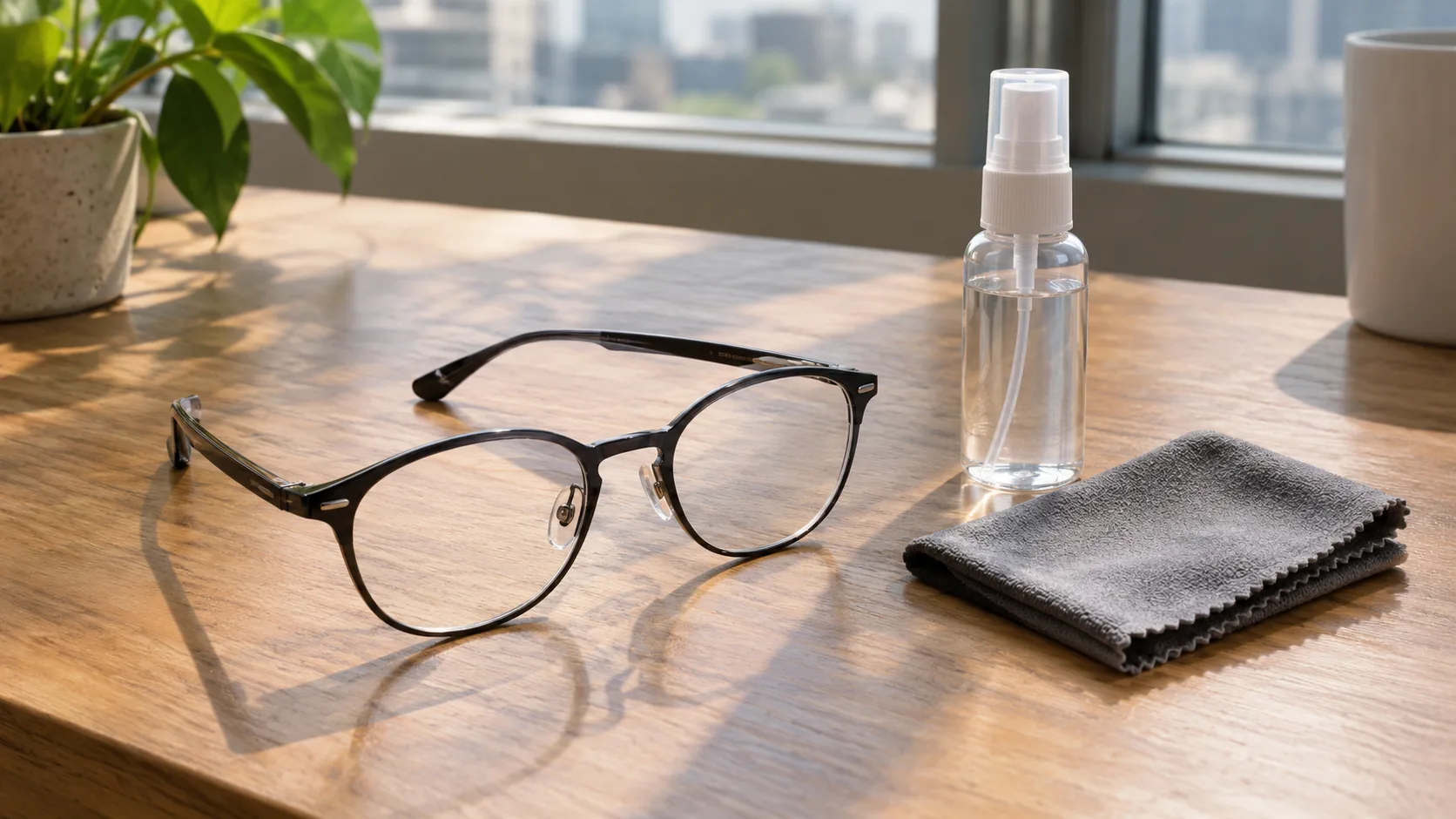
Here is how to clean glasses without damaging them: rinse them under lukewarm water, wash both sides and the frame with a drop of lotion-free dish soap, rinse again and dry with a clean microfiber cloth. Skip paper towels, shirt hems and household glass cleaners, which can scratch or strip lens coatings. Tinted, coated and camera lenses follow the same routine with a few extra rules, listed below.
Smears come from skin oil, hand lotion and dust being dragged around a dry lens. Washing first lifts the grit, so the cloth only has to dry the surface.
How to clean glasses in five steps
- Wash and dry your hands so lotion and oil do not transfer to the lenses.
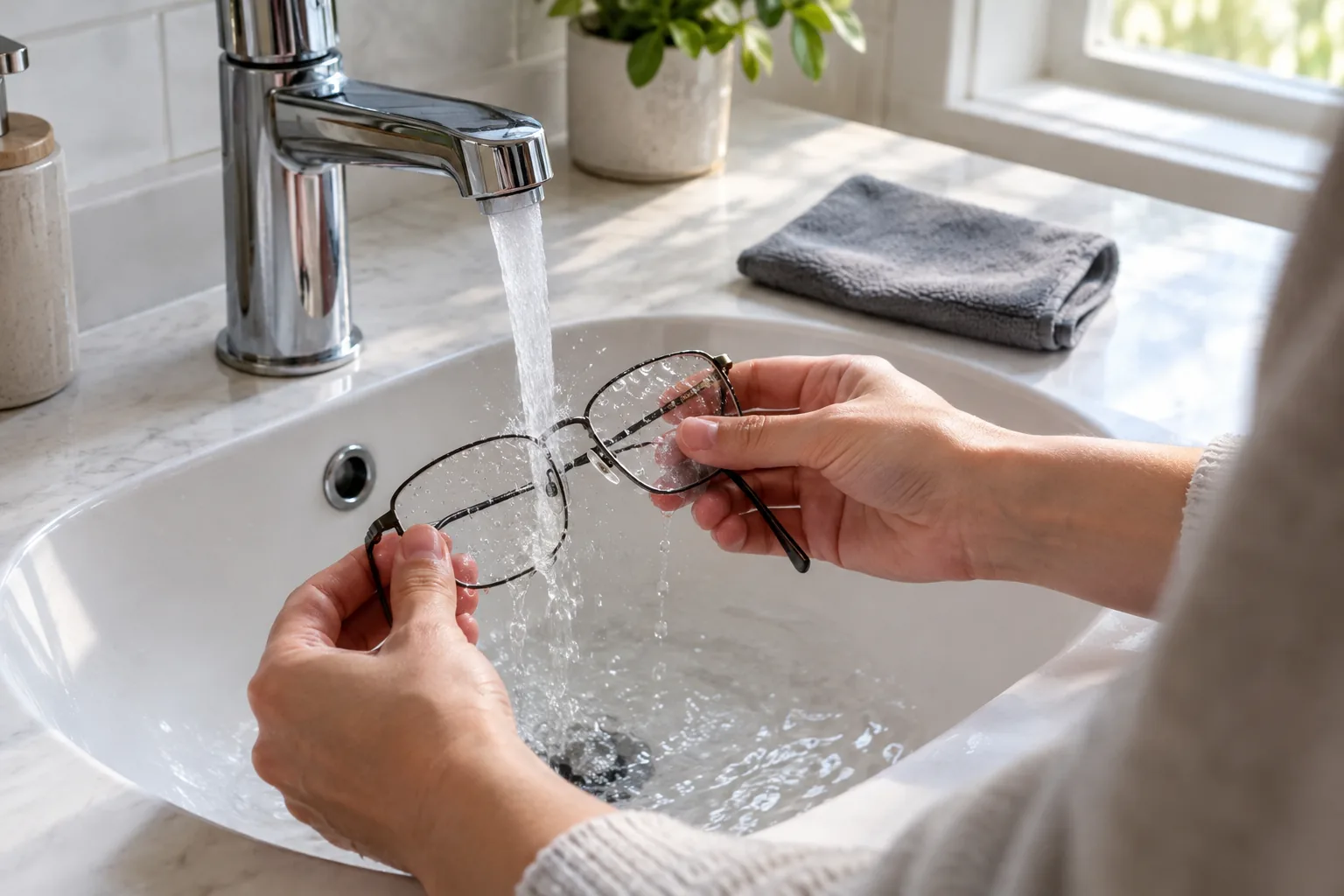
- Rinse the glasses under lukewarm tap water to float off dust and debris. Hot water can stress some coatings, so keep it lukewarm.
- Put one small drop of lotion-free dish soap on each lens. Rub it gently over both lens surfaces, the nose pads, the temples and the edge of the frame with your fingertips.
- Rinse again until no soap film remains.
- Shake off the water and dry with a clean, dry microfiber cloth or a lint-free towel. Use light, circular passes and let any last moisture air dry.
Do and don't checklist by lens type
The routine is the same, but what you can apply to the lens changes with the coating and the hardware in the frame.
| Lens or frame type | Do | Don't |
|---|---|---|
| Plain clear lenses | Rinse, wash with lotion-free dish soap, dry with microfiber | Wipe dry lenses, use paper towels or shirt fabric |
| Tinted lenses | Use lukewarm water and a clean cloth; check the lens maker's care sheet | Soak in hot water or scrub with abrasive powders |
| Coated lenses (anti-reflective, notch or filter coatings) | Wash gently, dry with a dedicated cloth, store in a case | Use window cleaner, bleach, vinegar or toothpaste |
| Frames with a camera or electronics | Wipe the frame with a barely damp cloth, follow the manual, unplug any cable first | Run under the tap, soak, or spray liquid near ports and openings |
Tinted and coated lenses
A coating is a thin layer, and scrubbing or harsh chemicals are what wear it down. The soap-and-water wash above is gentle enough for it, and a clean cloth does the drying. Replace or wash a cloth that feels gritty or greasy, because dirt trapped in the fibers drags across the lens.
Blue light and anti-reflective lenses
PrismaFocus blue light gaming glasses have a clear, low-tint lens with an anti-reflective coating, a TR90 frame and a hard case with a microfiber cleaning cloth. Anti-reflective surfaces can make fingerprints more noticeable, so wipe them with the supplied cloth and keep the glasses in the hard case between sessions.
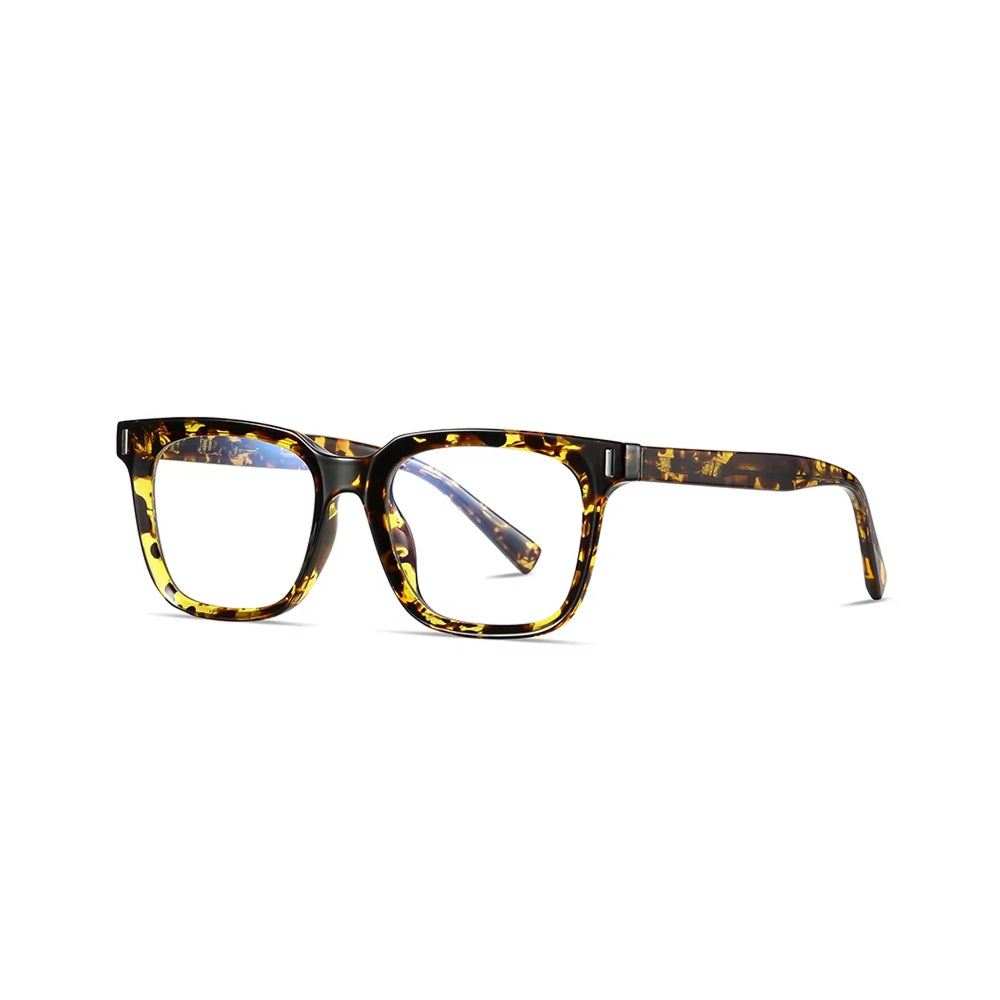 In this guidePrismaFocus$79.99View
Notch-coated color blind glasses
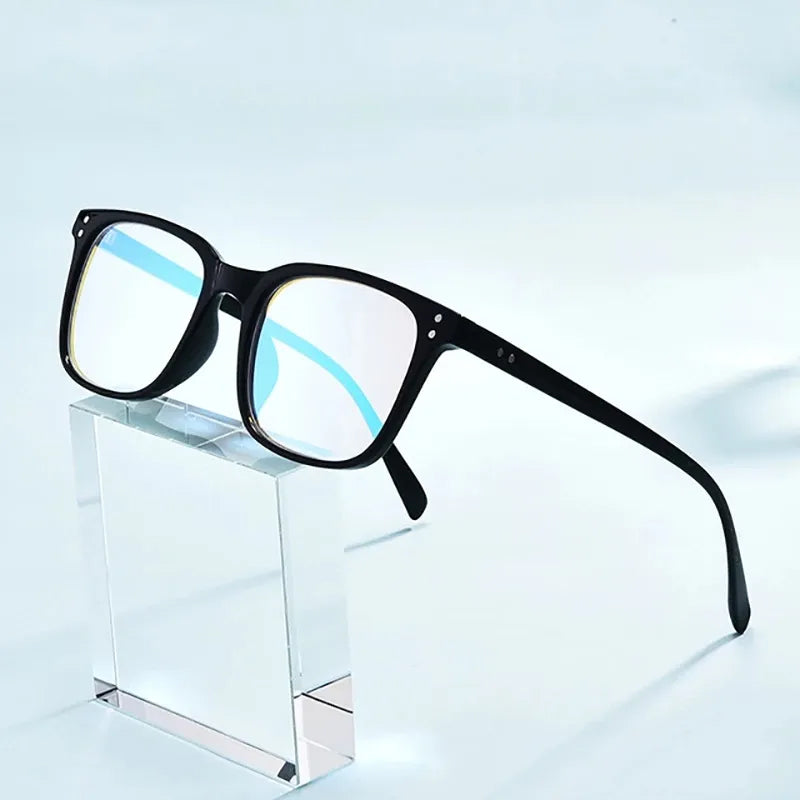
On ChromaVue, the spectral notch is part of the lens itself and not a film applied to the surface. The lenses show a purple tint that comes from the coating, so do not mistake it for residue and try to scrub it off. Wash and dry them like any coated lens. They can be worn over your existing glasses, so clean both pairs, and the space between them, where dust collects. A rigid case and microfiber cloth come in the box.
 In this guideChromaVue$119.99View
Cleaning camera glasses and frames with electronics
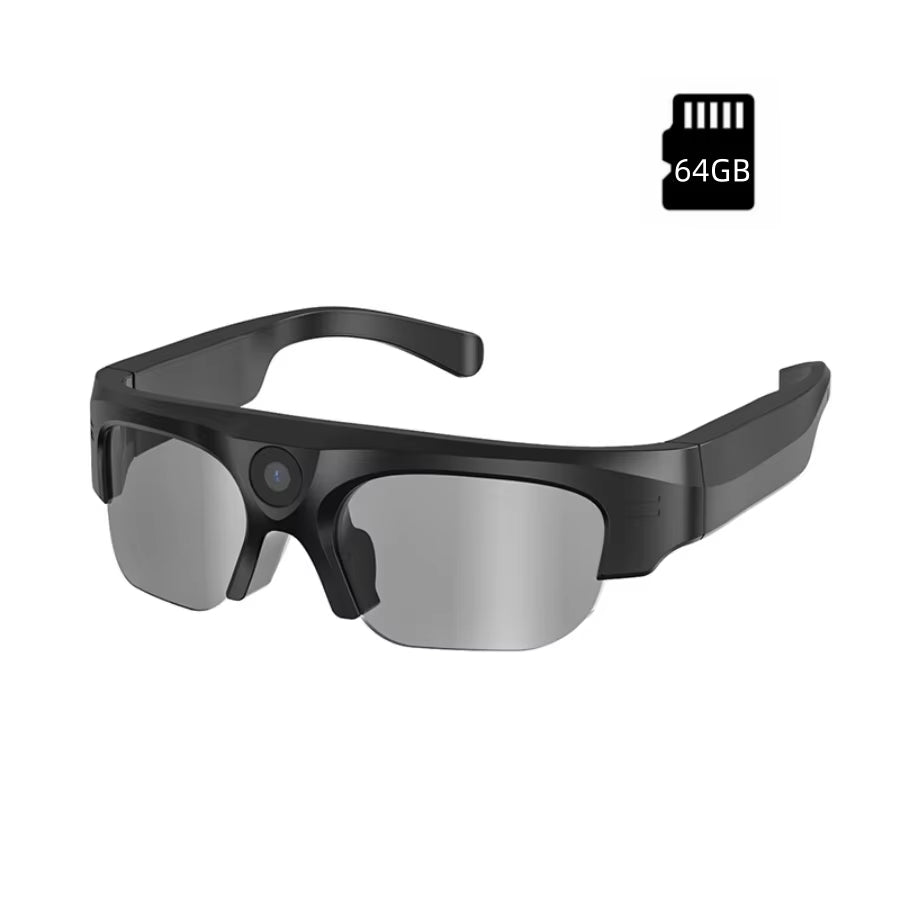
Frames with a built-in camera need a drier method. ClearVue has a camera in the frame, a USB-C charging cable and a user manual, so read the manual's care section before using any water on it. Until you have checked it, wipe the lenses and frame with a barely damp microfiber cloth and dry right away.
- Unplug the charging cable and follow the manual's steps before cleaning.
- Keep liquid away from the camera opening, microphone and charging port.
- Wipe the camera window with a dry cloth for dust. A smudge there can show up in video clips and photos.
- Store them in the protective case with the cloth.
ClearVue takes interchangeable lenses, and the box includes a set of white eyeglass lenses. If you swap lenses, clean them before fitting them. For more on how these frames work, see our guide Camera in Glasses: How They Work and What to Expect.
 In this guideClearVue$168.99View
What to use and what to skip
Dish soap, rubbing alcohol and sprays
Yes, a drop of lotion-free dish soap works, and it is the method in the steps above. Avoid soaps with added lotion, since they leave a film. A dedicated lens spray is also fine, and some come with a cloth; spray the lens, not the frame, and check that the label names your lens coating.
Rubbing alcohol can dull or strip some coatings, so check the lens maker's care sheet before using it. Distilled water is a fine rinse if your tap water leaves spots.
Toothpaste, window cleaner and paper towels
Toothpaste is abrasive and can leave fine scratches. Window and household glass cleaners can contain ammonia or other harsh ingredients. Paper towels and tissues are made of wood fibers that can scratch lenses. Leave all of them out of your routine.
No microfiber cloth on hand
Rinse the glasses, then use a clean lint-free cotton towel, such as a soft washed handkerchief, and pat dry. If the lens is dusty, rinse before you wipe. Dry-wiping a dusty lens is how fine scratches start.
Field note
Wash your microfiber cloth with a little lotion-free soap and rinse it well. Skip fabric softener, which leaves a film that smears across lenses. Air dry it and keep it in the case.
Fix greasy smears and hazy lenses
If your glasses will not look clear, the cause is usually a film of skin oil, lotion, hair product or soap residue. Washing with soap, rinsing well and drying with a clean cloth lifts that film. A cloth that is already oily will only spread it, so wash the cloth too.
To reduce greasy buildup between cleanings:
- Wash your hands before handling the glasses, and hold them by the temples, not the lenses.
- Keep hair spray, sunscreen and cooking oil away from the lenses. Take the glasses off first.
- Clean the nose pads and the inner edge of the frame, where oil collects and moves back to the lens.
- Store them in a case instead of loose in a bag or pocket.
Between the lens and frame
Dust and oil collect in the groove where the lens sits. Lather soap on your fingertip, work along the groove and nose pad hinges, then rinse. A soft, dry brush can lift loose dust from tight corners.
Scratches
Cleaning will not remove a scratch, and rubbing harder or using a paste can add more. If a scratch bothers your view, ask an eye care provider about lens replacement. For more on how other kinds of eyewear are built, read What Are Smart Glasses? Types, Uses and Limits Explained, or browse our smart glasses and heads-up displays.
A simple care schedule
| When | Do this |
|---|---|
| Each time you put them on | Check for dust; rinse or blow it off before wiping |
| Daily | Wash with lukewarm water and a drop of lotion-free dish soap, dry with microfiber, store in the case |
| Weekly | Clean nose pads, hinges and the lens groove; wash the cloth |
| Every few weeks | Check the frame fit and replace a worn cloth |
Away from home, carry a clean cloth in the case and a lens spray labeled for your coating. Rinse or spray before wiping, even on the go.