What Is a Ham Radio and What Can You Do With One?
A ham radio is a licensed two-way radio for the amateur bands. See what you can do with one, how the license works and how to pick a first radio.
The Folio & Current Team
November 8, 2026 · 6 min read
A ham radio is a two-way radio used for amateur radio, a licensed hobby and public service activity where operators talk to each other, send data and experiment with antennas on frequency bands set aside for non-commercial use. If you are asking what is a ham radio in practical terms, it is a transceiver (a transmitter and receiver in one box), an antenna and a power source. In the US you need an amateur license to transmit, but listening does not require one.
This guide covers what the gear is, a table of real uses, how the license works and a realistic path to your first radio.
What is a ham radio? The three parts of a setup
Ham radio and amateur radio are the same thing. The origin of the term ham is debated, so be cautious with any single story. What matters is the setup, which has three parts.
- Transceiver: the radio itself, which sends and receives on the bands it covers. Handhelds, mobile units for vehicles and base station sets all fit here.
- Antenna: the part that sets how your signal leaves and arrives. Some hobbyists build or swap antennas as a main form of experimentation.
- Power supply: a battery pack, a vehicle supply or a mains-fed supply, depending on the radio.
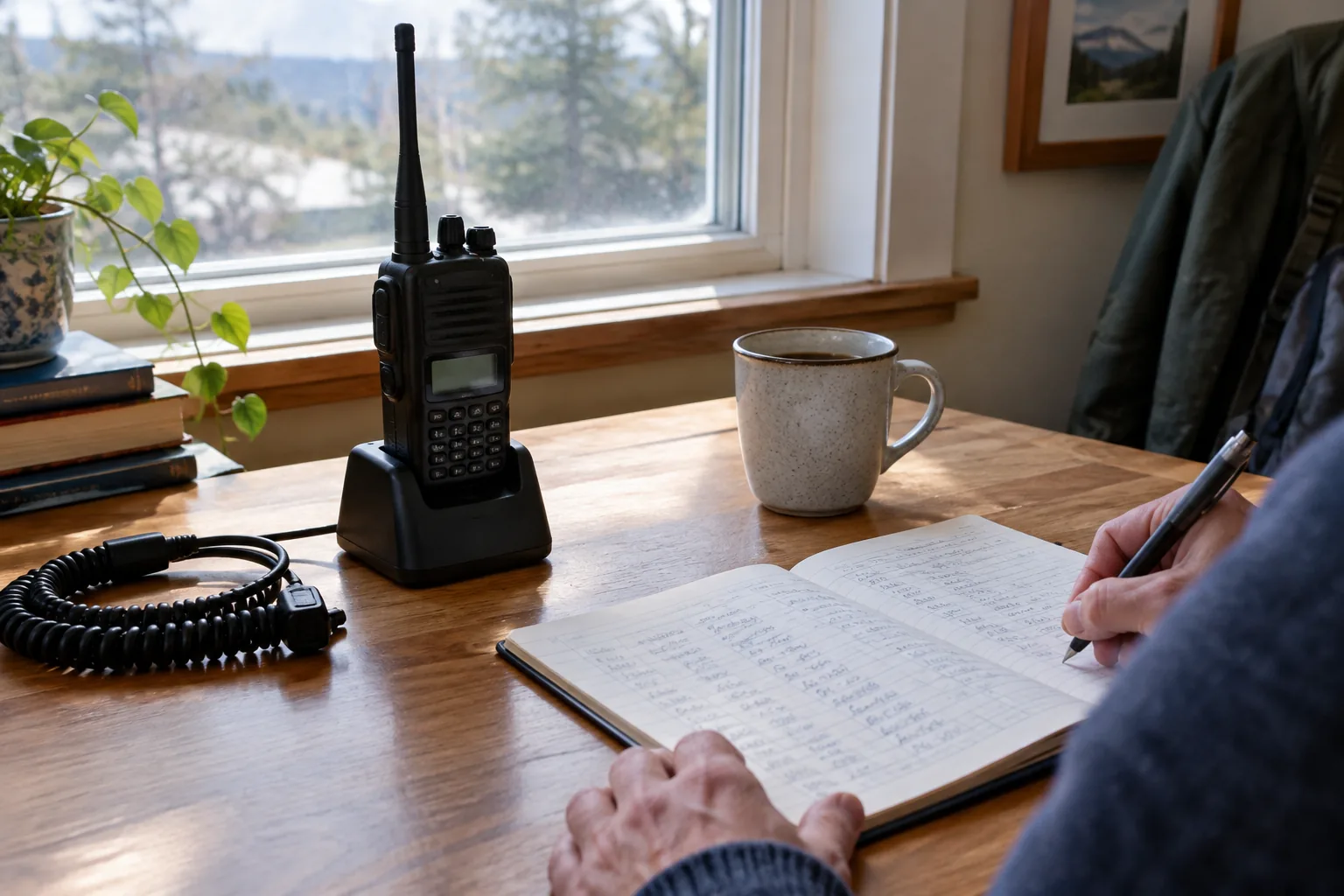
A handheld with its stock antenna is the smallest version. A home station adds a larger antenna, a power supply and sometimes a computer for digital modes.
What can you do with a ham radio?
Uses range from local chats to emergency support and building your own equipment. This table shows what each activity involves and the gear it points to.
| Activity | What it involves | Typical gear |
|---|---|---|
| Local conversations | Talking with nearby operators through a repeater, a station that relays your signal | VHF/UHF handheld or mobile radio |
| Emergency communication | Joining volunteer networks that pass messages when other systems are down | Handheld, spare batteries, a charging plan |
| Public service | Providing radio support at community events such as races and parades | Handheld with a programmed channel list |
| Long-distance contacts | Reaching other regions or countries on shortwave bands | Base station with a larger antenna |
| Digital modes | Sending text and data over radio, often with a computer | Transceiver, computer, interface |
| Experimentation | Building antennas, learning radio theory, exploring the radio spectrum | Tools, cable, antenna parts |
| Community and learning | Joining clubs, nets and exam study groups | Any licensed radio |
So the five uses to remember are local contact, emergency communication, public service, long-distance and digital contacts, and experimentation.
How far a 5 watt handheld can reach
There is no single distance. A handheld on VHF or UHF works mostly by line of sight, so hills, buildings and trees matter alongside the wattage figure. Standing on high ground with a clear path is a major factor.
A repeater changes the picture. Your handheld talks to a repeater on a tower or a ridge, and the repeater rebroadcasts to a wider area. Antenna choice and height also change the result, so a handheld indoors and the same handheld on a hilltop give very different results.
For long distance you move to shortwave bands, where signals can travel far, and a home antenna becomes the main factor. Each band has its own rules for who may use it and in which mode, so check the band plan for your license class before you transmit.
Ham radio vs CB, scanners and emergency radios
These devices are often grouped together, but they do different jobs.
| Device | Can you transmit? | License in the US | Main use |
|---|---|---|---|
| Ham radio | Yes, on amateur bands | Amateur license required to transmit | Hobby, emergency support, experimentation |
| CB radio | Yes, on set channels | No individual license for the personal service | Short-range chat, often in vehicles |
| Scanner | No, receive only | None to listen | Monitoring public safety and other traffic |
| Emergency weather radio | No, receive only | None to listen | Weather alerts and news |
If you want to hear traffic without transmitting, read our guide on radio frequency scanners. For a computer-based receiver, software defined radio is compared with scanners and ham gear there.
What the ham radio license involves
In the US, transmitting on amateur bands requires a license. You study a question pool, pass a multiple-choice exam given by volunteer examiners and receive a call sign, which is your on-air identifier. Some clubs run study sessions and exam days, so ask a local club about dates and fees.
There are three levels. The entry level, Technician, covers VHF and UHF privileges and some shortwave access, which suits local repeater use. General and Amateur Extra add more shortwave privileges. Morse code is not required to get a license.
The exam covers basic radio theory, operating rules, antennas and electrical basics. Study the actual rules for your license class, since privileges differ by band and mode.
A realistic first-radio path
Once you understand what is a ham radio and what it needs, follow the steps in this order. The radio comes after the license, not before.
- Listen first. Visit a club meeting or check a local net schedule to hear how operators talk.
- Study for the entry-level exam using a question pool and practice tests.
- Pass the exam and get your call sign.
- Choose a handheld that covers the bands your local repeaters use. Check your area's repeater list before you buy.
- Program a few local repeaters, then check in on a net and say you are new.
- Add a larger antenna or a home station once you know which activity you enjoy.
A starter handheld option
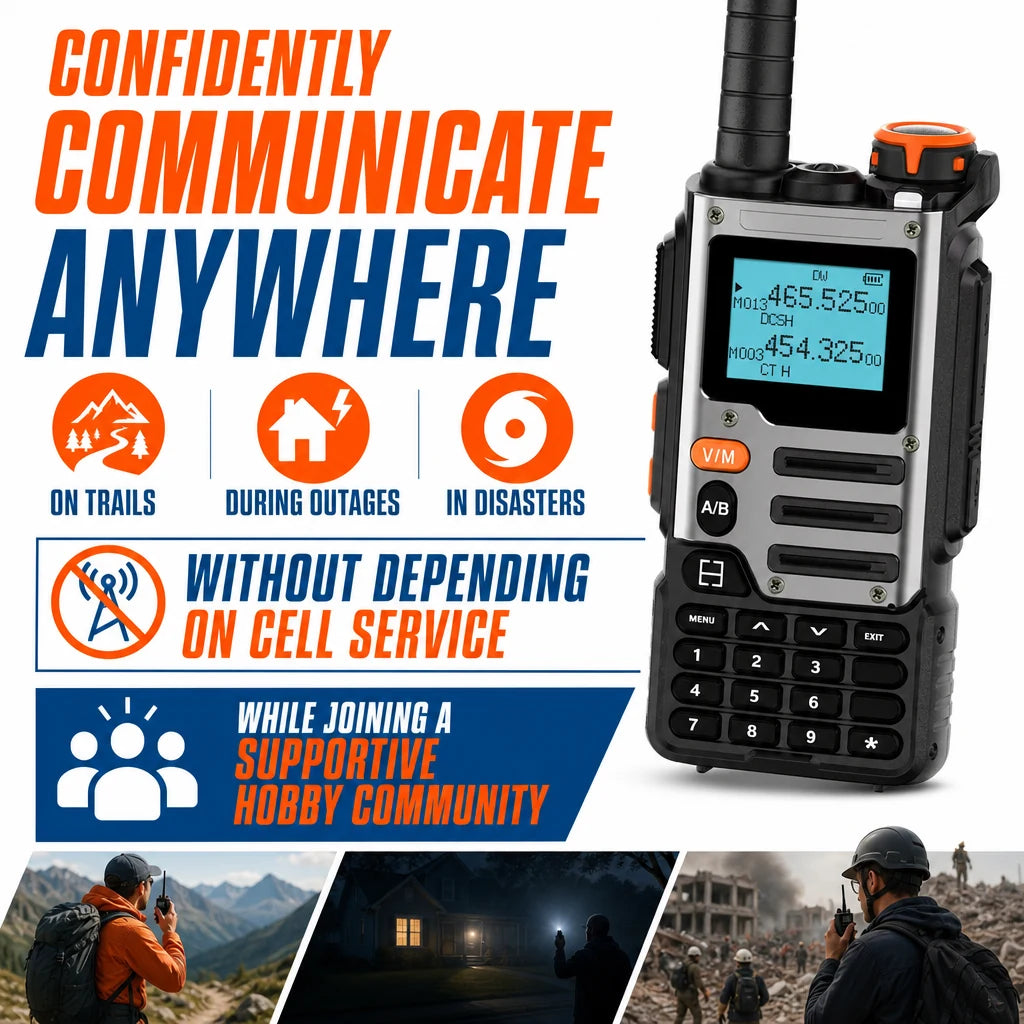
FreqVox is a handheld ham radio that covers 7 frequency bands, including VHF, VHF2 and UHF. You pair your phone with it over Bluetooth, choose the repeaters for your area in the companion app and write the channels to the radio wirelessly, with no cable and no computer. It holds 999 channel memories, so frequencies you use often can be recalled from the radio without the phone.
A 3000mAh lithium-ion pack powers it and charges through USB-C, with a USB-C charger in the box. The package also includes an antenna with an SMA-female connector, a belt clip, a lanyard, a quick-start guide and a user manual. Transmit only after you hold your license and follow the manual and local rules.
 In this guideFreqVox$99.99View
Field note
Before buying, write down the repeaters you plan to use and confirm the radio covers their bands. Then you can load them into the app in one sitting.

Common first-radio mistakes
- Transmitting before you hold a license. Listening is open to all, but transmitting needs your call sign.
- Buying for bands you will not use. Check local repeater frequencies first.
- Ignoring the antenna. A stock antenna is a starting point, and antenna changes alter what you hear.
- Skipping a charging plan. Keep a USB-C charger or spare power ready if you plan to use the radio during outages.
- Confusing a receive-only radio with a ham radio. A weather or AM/FM unit cannot send a message.
Where an emergency radio fits
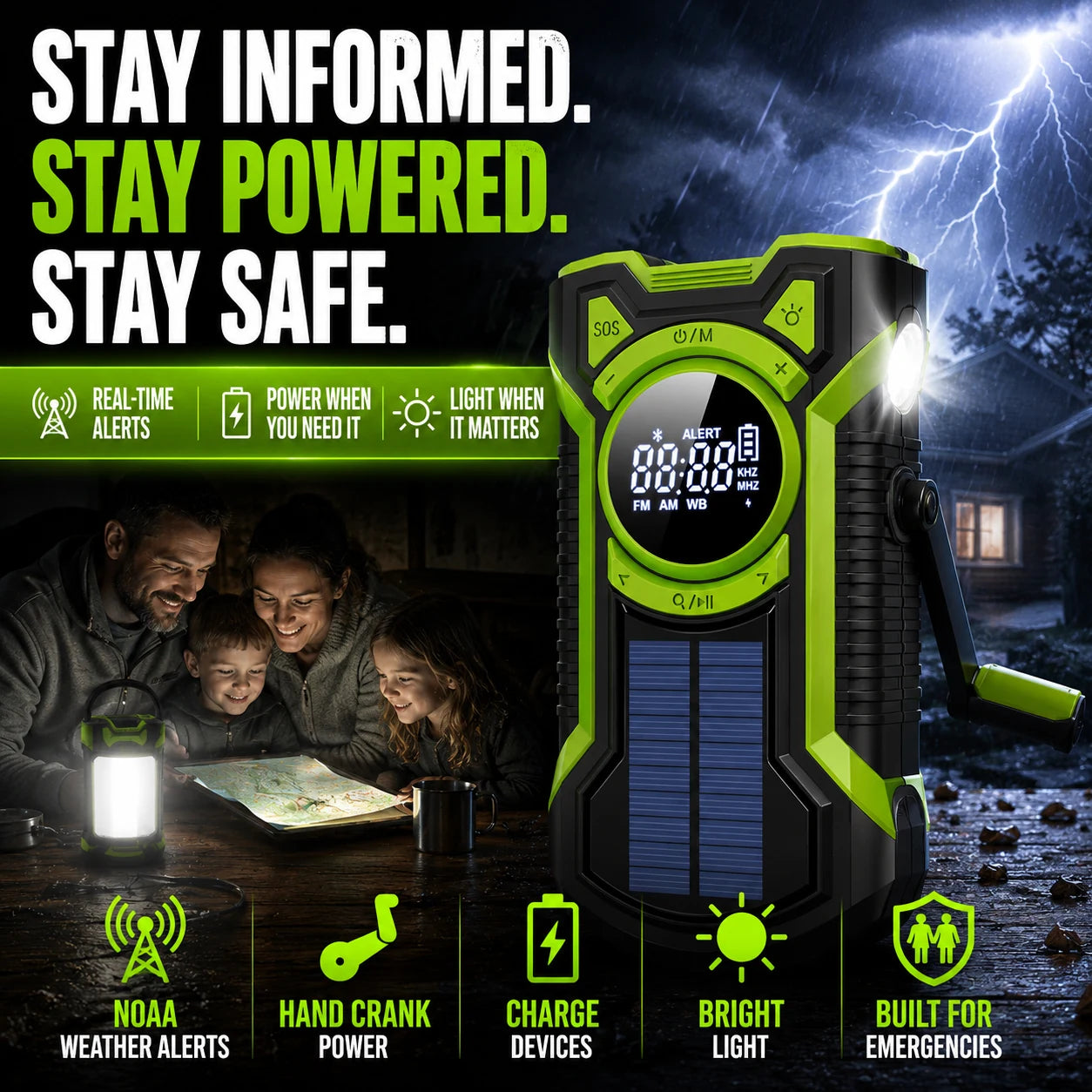
An emergency radio and a ham radio overlap in purpose but not in function. StormReady receives AM, FM and seven NOAA frequencies and runs on solar, hand crank or USB-C power. You program a SAME county code, and a warning issued for that area triggers an alarm along with a flashing strobe. It also includes a multi-mode LED flashlight, USB output for a phone and an SOS alarm. It is for listening to alerts, not for two-way talk.
For more on power sources and bands, see what to check in a good emergency radio, or browse the Radios & Emergency Comms collection.
 In this guideStormReady$119.99View