Good Emergency Radio: Power Sources, Bands and What to Check
A good emergency radio receives NOAA weather bands and AM/FM and runs on more than one power source. Use this checklist to compare options and set one up.
Ryan Kessler
October 20, 2026 · 6 min read
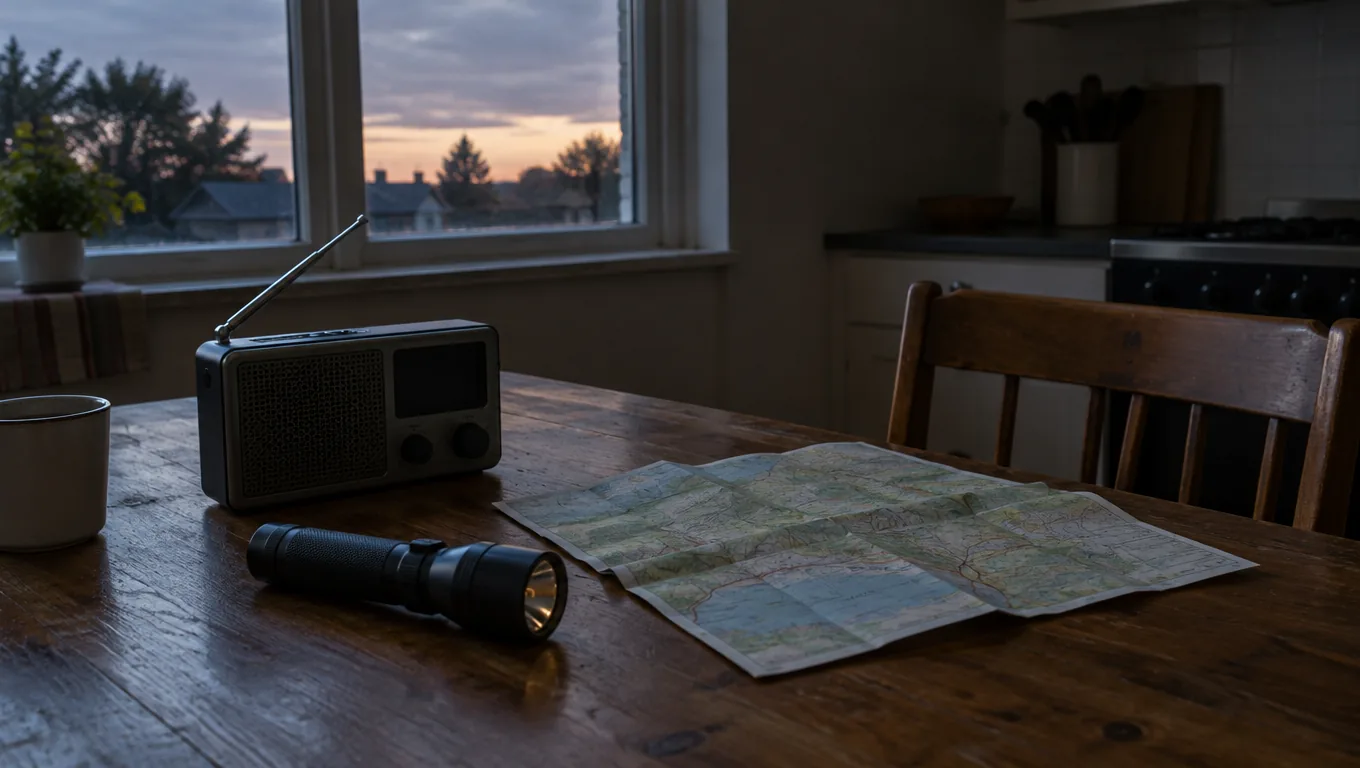
A good emergency radio receives NOAA weather bands plus AM and FM, and it runs on more than one power source so you have other ways to power it when the grid is down. Look for hand crank, solar or USB charging, a way to program your county for alerts, and a flashlight you can use in the dark. The rest of this guide shows how to compare those features and how to check a radio before you need it.
A radio for emergency use is a stand-alone receiver. It does not depend on cell towers or an internet connection, which is why it can still receive broadcasts when phones struggle to connect.
What a good emergency radio does in an outage
During a storm or an extended outage, broadcasters and weather services pass along emergency information over the air. A receiver picks that up directly, so you can follow severe weather updates, evacuation notices and local instructions without a data connection.
Two kinds of broadcasts matter most. NOAA weather radio carries forecasts and weather alerts on dedicated frequencies. AM and FM stations carry local news and, in many areas, relay emergency alert system messages.
Bands: what to listen to
NOAA weather channels
NOAA weather radio broadcasts on seven channels in the VHF range, from 162.400 to 162.550 MHz. A radio that lists seven NOAA channels covers the full set, so you can find the one that serves your area.
AM and FM
Tune to a local news station on AM or FM when an emergency is under way. AM is worth having because many stations carry local news and weather. If you are unsure which station to use, scan the dial now and write down two or three local news stations on a card in your kit.
SAME county codes
SAME programming lets a radio respond only to warnings issued for the counties you choose. You enter your county code once, and the radio then monitors for alerts that match it. Look up your code before you need it, and follow the manual for the entry steps.
Power sources compared
The power question decides how you keep a radio running through a long outage. Compare what each input needs from you.
| Power source | What it needs | Worth knowing |
|---|---|---|
| Hand crank | Your own effort, no fuel or sunlight | Can be used indoors, at night or in bad weather |
| Solar panel | Daylight on the panel | Place it by a window or outdoors in daytime |
| USB-C or USB charging | A wall adapter, power bank or computer | Top up at home before storm season |
| Replaceable batteries | Spare cells stored with the radio | Check the battery type and store spares in the kit |
| Built-in battery | Charging from another input | Holds a charge you can draw on later |
No single input covers every situation. A hand crank radio answers the cloudy, dark or indoor case, solar answers the long outage with daylight, and USB charging keeps the unit topped up between events.
Do hand crank radios really work?
Yes, a hand-crank radio turns your arm motion into electrical charge that powers the receiver. It is a backup input rather than a replacement for charging ahead of time. Crank it in a calm moment so you know how the handle feels and how the radio responds, and read the manual for how to crank your model.
Think of any phone-charging output as a secondary feature. The radio comes first, so decide how you will spend stored power if you also want to charge a phone.
Two radios we stock, side by side
Both models below receive AM, FM and seven NOAA frequencies. They differ in power inputs and extras. You can browse the full range in Radios & Emergency Comms.
StormReady
StormReady accepts solar, hand crank or USB-C power. You use whichever input is available, and the USB-C port is the one used for charging at home. It supports SAME county code programming: a warning issued for the programmed area triggers an alarm along with a flashing strobe. The unit also includes a multi-mode LED flashlight, a USB output for a phone and an SOS alarm.
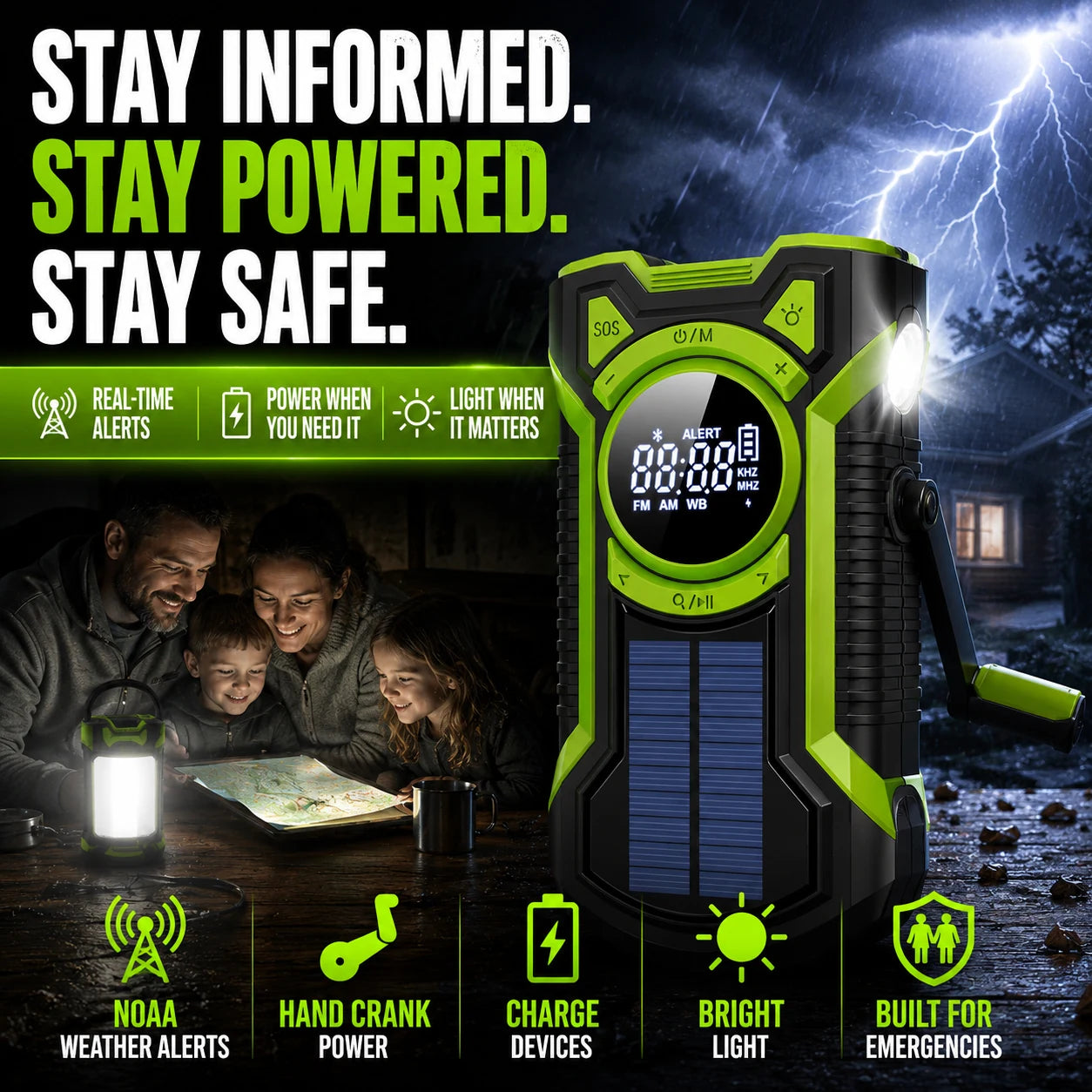 In this guideStormReady$119.99View
StormCrank
StormCrank accepts five kinds of power: solar, hand crank, USB, batteries and its built-in battery. It has a built-in 2000mAh battery bank with USB output, a 4-LED reading lamp and a 1W flashlight with a zoomable head. An SOS alarm is built in as a signaling tool. In the box you get the radio, a USB charging cable and a user manual with quick start guide.
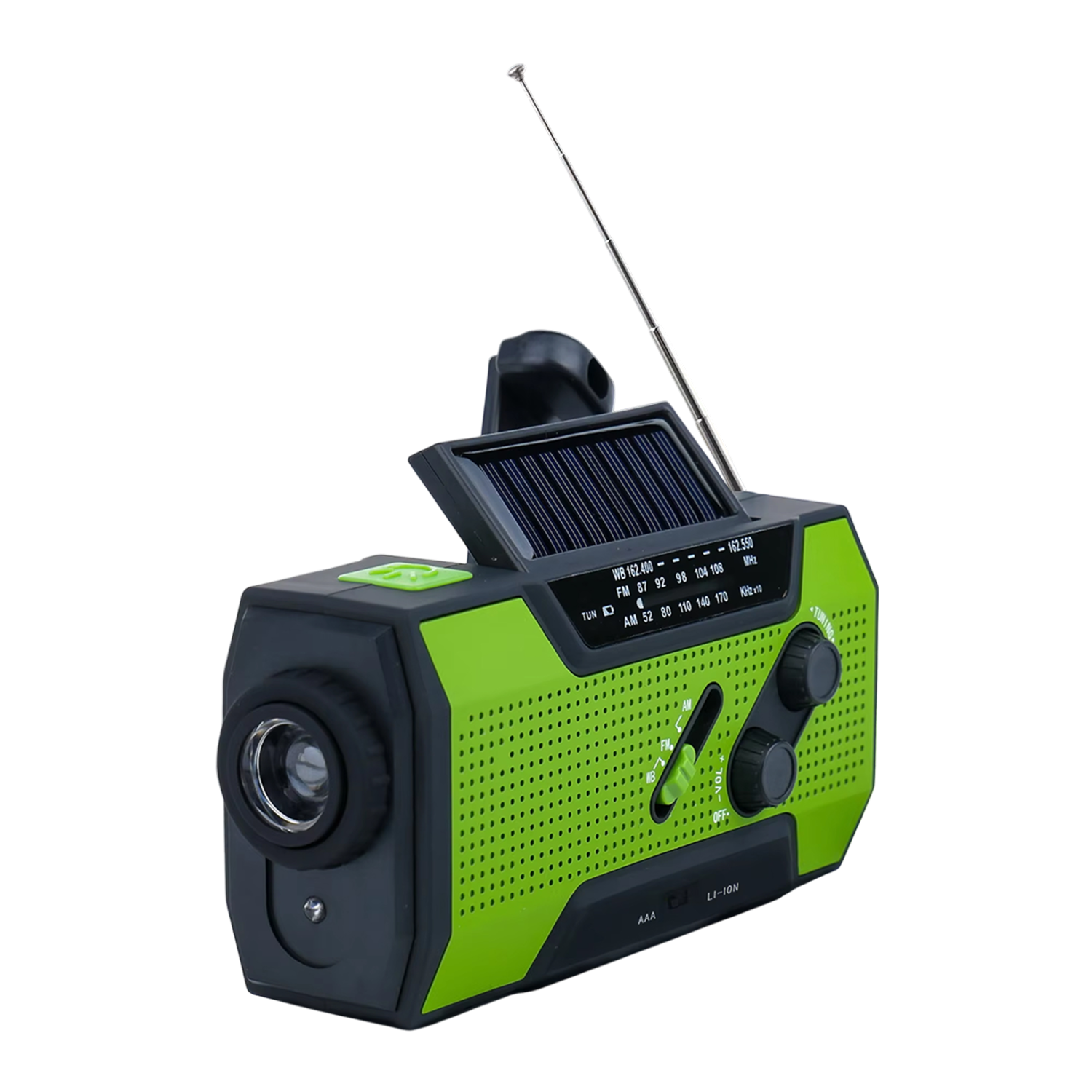 In this guideStormCrank$119.99View
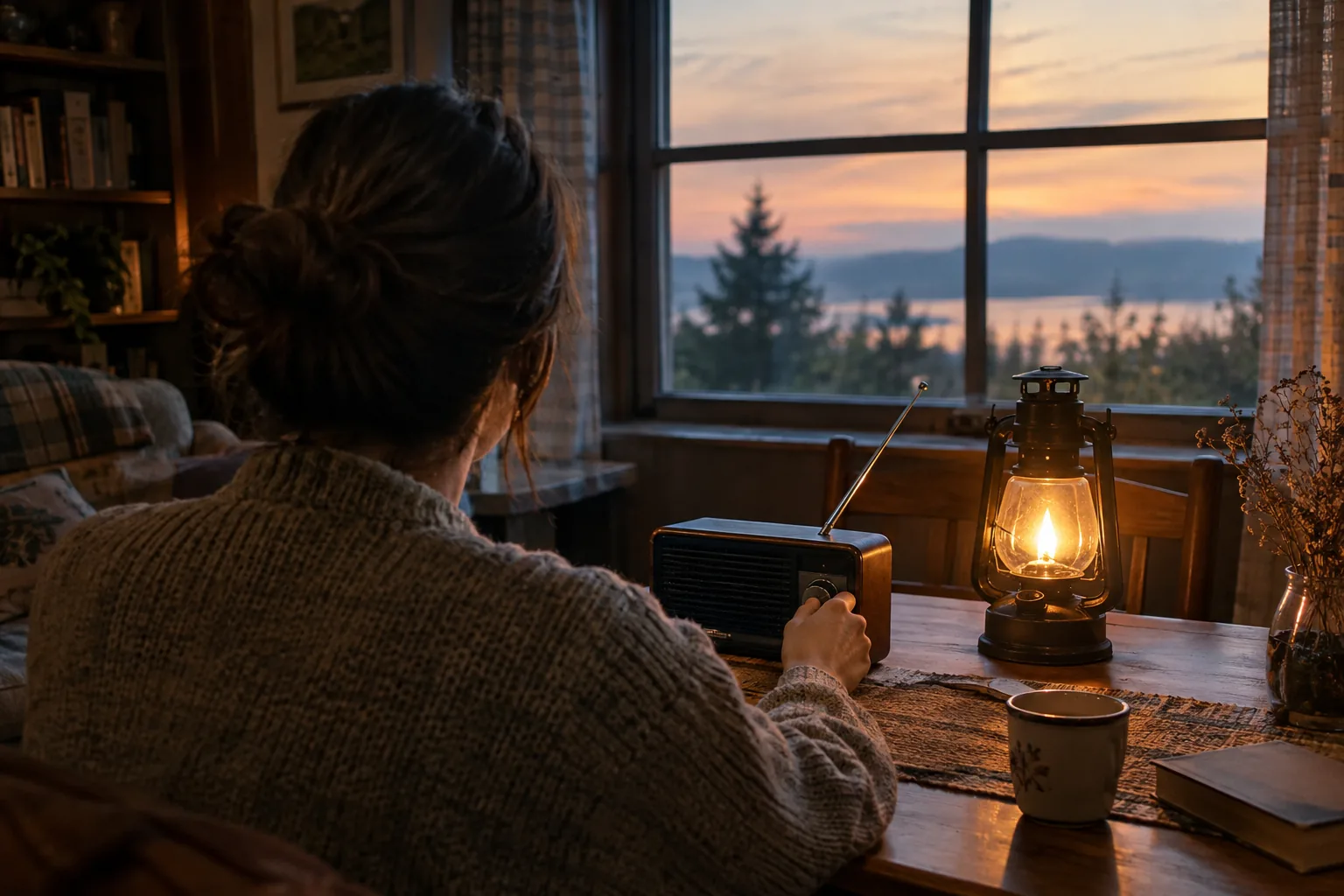
Checklist: what to check before you buy
Use this table to judge whether a radio is a good emergency radio for your home and your kit.
| Check | What to look for |
|---|---|
| Bands | NOAA weather channels plus AM and FM |
| Alerts | SAME county code programming and an alarm |
| Power | At least two inputs, ideally crank or solar plus USB |
| Light | Flashlight, with a lamp for table use if you want one |
| Signaling | An SOS alarm for outdoor trips and emergencies |
| Phone output | USB output if you want to charge a phone |
| Handling | Controls you can find by touch; a manual you keep with it |
Skip radios that list a feature without saying how it works. If a listing does not name the bands or the power inputs, move on.
A trial routine for your radio
Write "radio routine" at the top of a card, add these steps and keep it in the kit. Repeat them when the seasons change or when you move.
- Charge the radio through its home charging input and read the manual.
- Scan AM and FM and note your local news stations.
- Find the NOAA channel that serves your area.
- Program your SAME county code if the radio supports it.
- Run the hand crank or place the solar panel in daylight, and confirm the radio responds.
- Try the flashlight, lamp and alarm once, then switch them off.
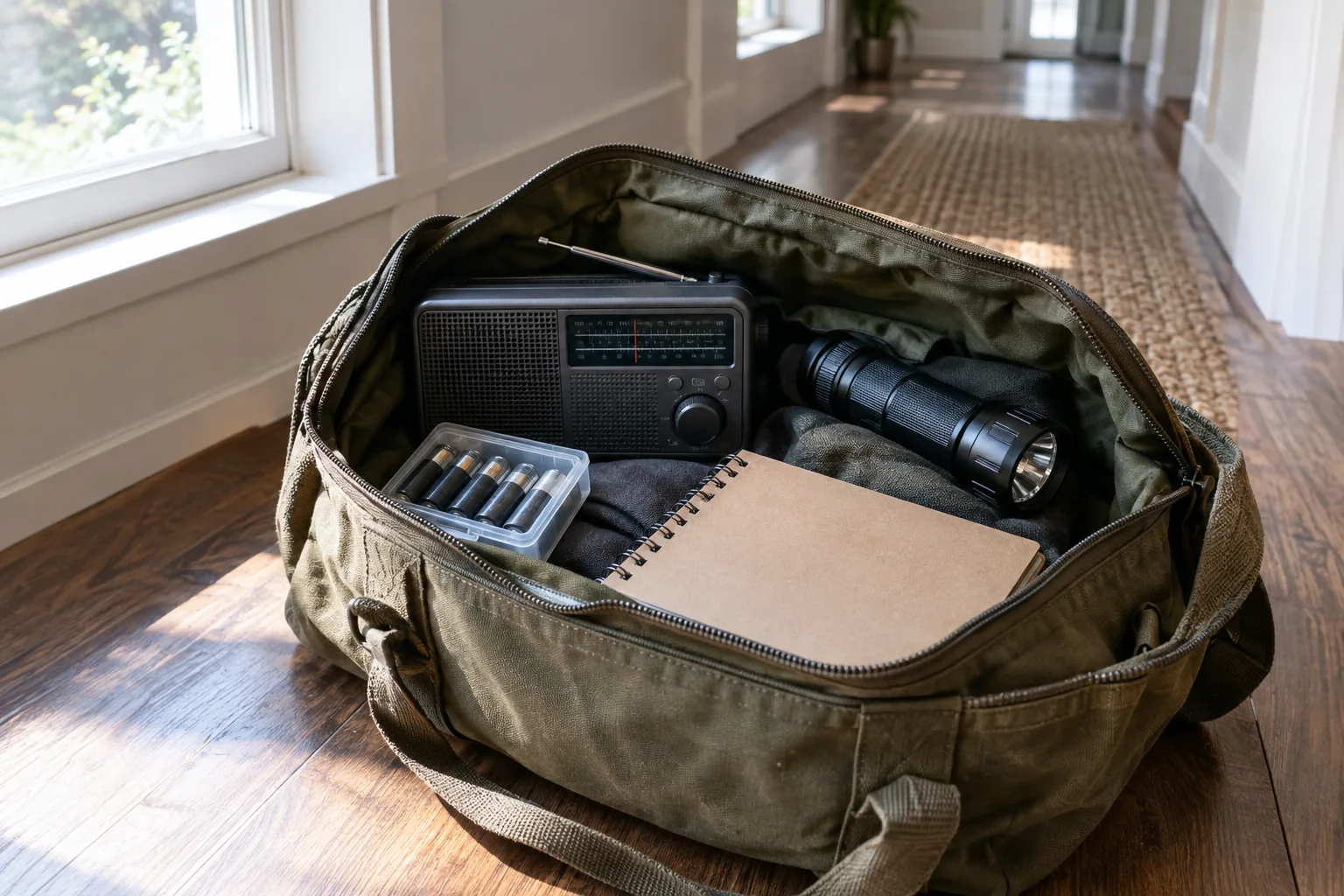
- Store the radio with its cable, any spare batteries and the manual.
Field note
Put a recurring reminder on your calendar to run the routine twice a year. Charge the radio, replace stored batteries if your model uses them, and check that the alert settings still match your county.
Common mistakes
- Buying a radio that lists only AM and FM, with no NOAA weather channels.
- Relying on one power source, such as solar, with no backup for dark days.
- Skipping the county code and then missing the alarm for your area.
- Storing the radio without the cable or the manual.
- Leaving the first use for the emergency itself.
Follow the manual for charging, handling and storage, and ask your local emergency management office what alert channels your area uses. A good emergency radio is one you have already run once, with its power, bands and alerts set up before the weather turns.