Portable Radio FM AM: How to Choose One for Home and Outdoors
Choose a portable radio fm am by reception, tuning type, speaker and power source. This guide gives the decision steps and a weak-signal checklist.
The Folio & Current Team
November 11, 2026 · 6 min read
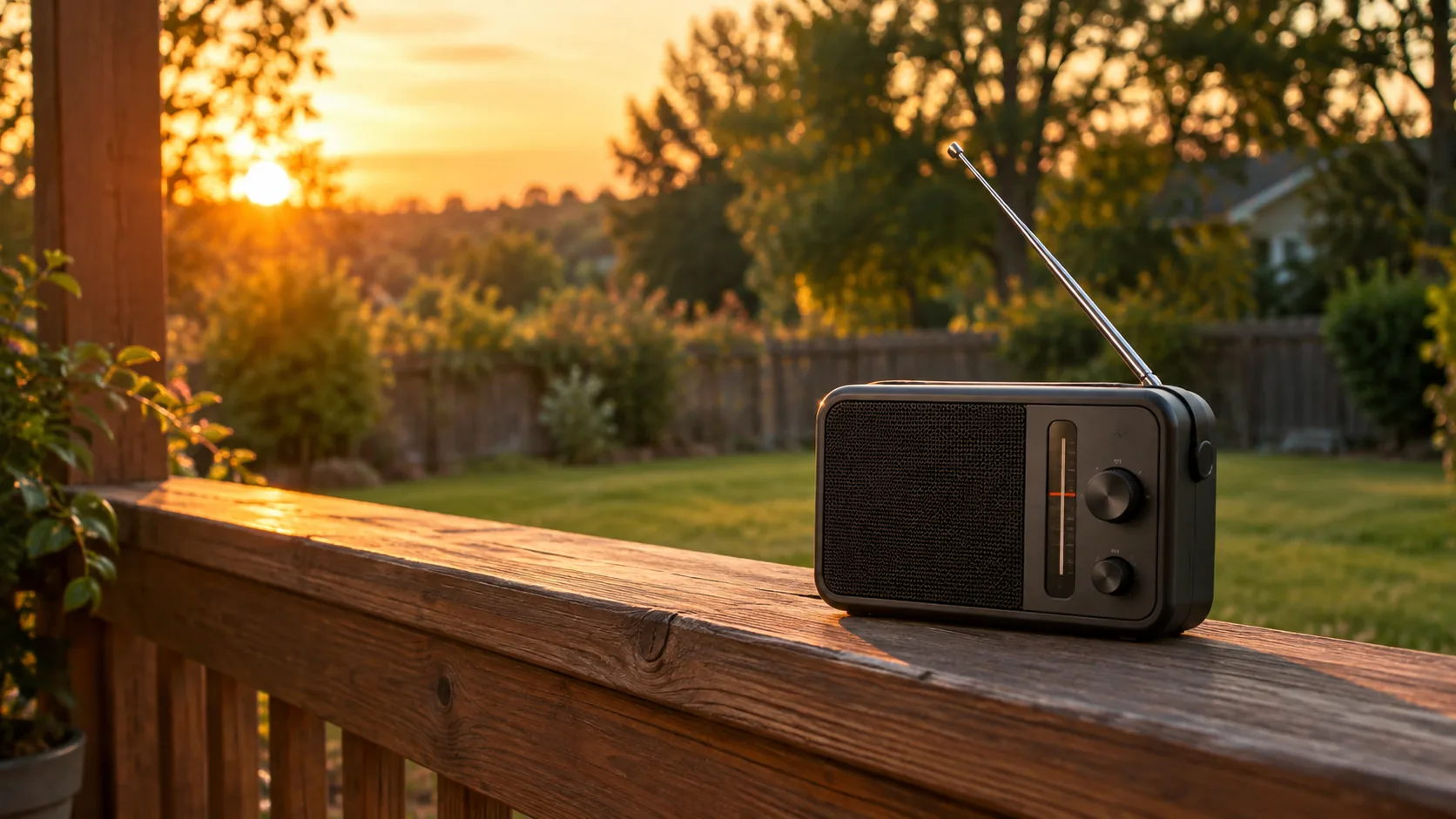
A portable radio fm am is chosen by four things: how well it pulls in stations where you listen, how you tune it, how loud and clear the speaker is, and what powers it. Pick the power source first if the radio is for outages, then check the antenna and tuning type. This guide walks through each decision in order and ends with a checklist for weak-signal areas.
Whether you want an fm am portable radio for a kitchen shelf, a job site, a campsite or a storm kit, the same steps apply. Only the weight you give each step changes.
Step 1: Decide where the radio will live
Write down the one or two places you will use it most. A radio that sits on a nightstand has different needs than one that rides in a pack or waits in a hallway closet.
- Home shelf or workshop: a bigger speaker and plug-in or rechargeable power matter most.
- Outdoors and camping: a compact body, a carry strap or handle, and a power source that does not depend on an outlet.
- Storm and outage kit: weather band reception, several power inputs and a light on the same unit.
- Commute or travel: a small body and battery power you can swap.
If one radio has to cover two of these, favor the harder case. A radio built for outages will also work on a kitchen counter, but a shelf radio rarely covers an outage.
Step 2: Understand reception before you compare specs
AM and FM behave differently. FM is generally clearer for music and talk but depends on a line of sight to the transmitter, so hills, concrete buildings and basements weaken it. AM travels farther and bends around terrain, but it picks up electrical noise from power lines, lamps, chargers and motors.
Antennas to look for
For FM, look for a telescopic antenna that extends and pivots. Raise it, turn it and change its angle while you listen. For AM, the antenna is usually built inside the case, so you aim the whole radio. Turning the body a quarter turn can change AM reception more than any button.
Why location changes everything
The same radio sounds different near a window than in the middle of a house. Metal roofs, steel-framed buildings and vehicles all block signal. If your reception is weak, a radio with a good antenna and a clean tuning dial gives you more to work with than extra speaker features.
Step 3: Choose analog or digital tuning
Tuning type changes how you find and return to stations.
| Tuning type | How it works | Fits when |
|---|---|---|
| Analog dial | You turn a knob and a pointer moves across a printed scale | You want few controls and can fine-tune by ear |
| Digital display | A screen shows the exact frequency and you step through stations | You want to know the station number and return to it |
| Digital with presets | You store saved stations on buttons | Several people share the radio or you switch between a few stations |
Analog dials can drift slightly and are harder to set precisely, but they have little to learn. A digital readout helps in a dark room or a tent, especially if the display has a backlight. Check the product page for whether a display is included.
Step 4: Check the speaker and the audio outputs
A small speaker can sound fine for talk radio and weather updates and thin for music. Larger cabinets generally have more room for lower tones, but they add weight. For outdoor use, think about whether you will hold the radio, hang it or set it on a table.
- Look for a volume knob you can turn without looking.
- A headphone jack lets you listen without disturbing others.
- A tone control, if present, lets you favor voices over hiss on weak AM stations.
- A carry loop or handle matters if the radio will move around.
Step 5: Pick the power source
Power is where a portable radio fm am for outdoors and outages differs most from a kitchen radio. Match the source to the situation, and consider carrying more than one.
| Power source | What it means | Consider when |
|---|---|---|
| Replaceable batteries | You load cells that you can swap out | You want to carry spares on trips |
| Built-in rechargeable battery | You charge it from a cable or outlet | The radio sits at home and gets regular use |
| USB charging | A cable connects to a power bank, computer or wall adapter | You already carry USB gear |
| Hand crank | Turning a handle supplies power | You may have no outlet and no spare cells |
| Solar panel | A panel on the case collects light | You are outdoors in daylight or by a window |
No single source suits every case. Cells run out, solar needs light and cranking takes effort, so a radio that accepts several sources keeps more options open. For a deeper look at bands and power in outage radios, read Good Emergency Radio: Power Sources, Bands and What to Check.
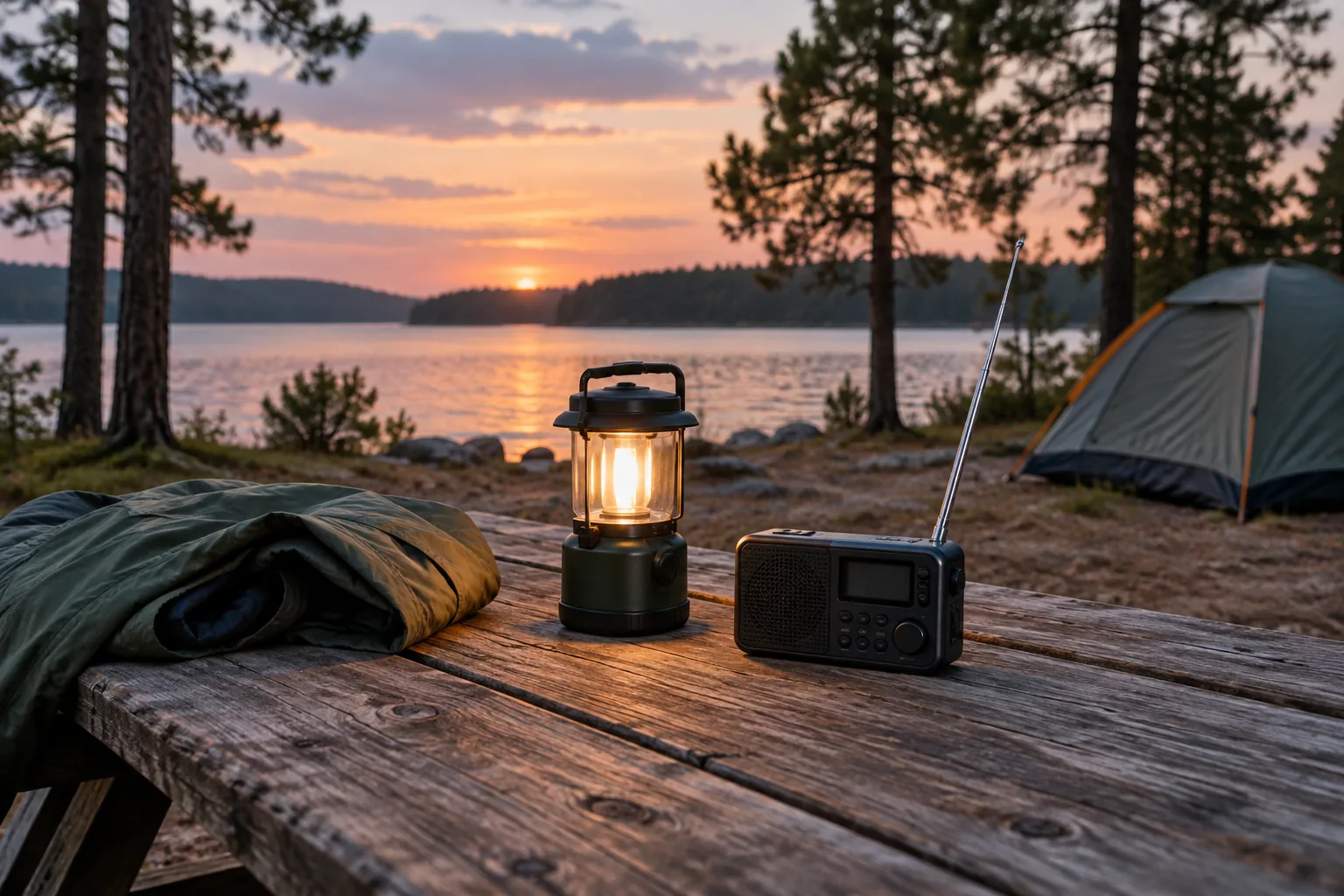
Two radios built for outages and outdoor trips
If your list leans toward storms and camping, we stock two hand crank radios in the Radios & Emergency Comms collection. Both receive AM, FM and NOAA weather bands.
StormCrank
StormCrank receives seven NOAA channels plus AM/FM and accepts five kinds of power: solar, hand crank, USB, batteries and its built-in battery. It also has a built-in 2000mAh battery bank with USB output, a 4-LED reading lamp, a 1W zoomable flashlight and an SOS alarm. It works as a stand-alone receiver, so listening needs no phone or internet connection.
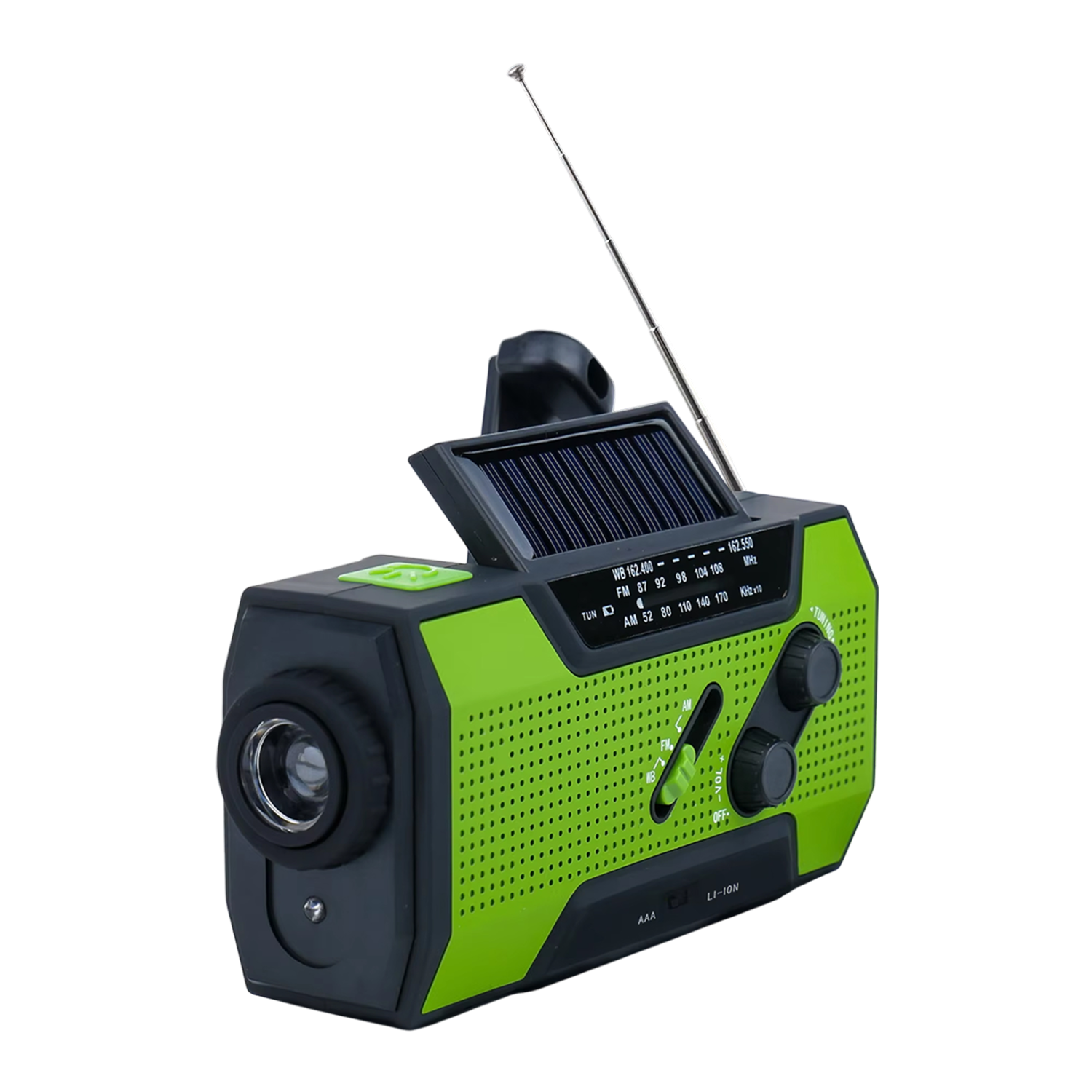 In this guideStormCrank$119.99View
StormReady
StormReady receives AM, FM and seven NOAA frequencies and runs on solar, hand crank or USB-C power. You program your SAME county code so the radio monitors for warnings issued for that area, which triggers an alarm along with a flashing strobe. It also has a multi-mode LED flashlight, a USB output for a phone and an SOS alarm. Follow the user manual for handling and care.
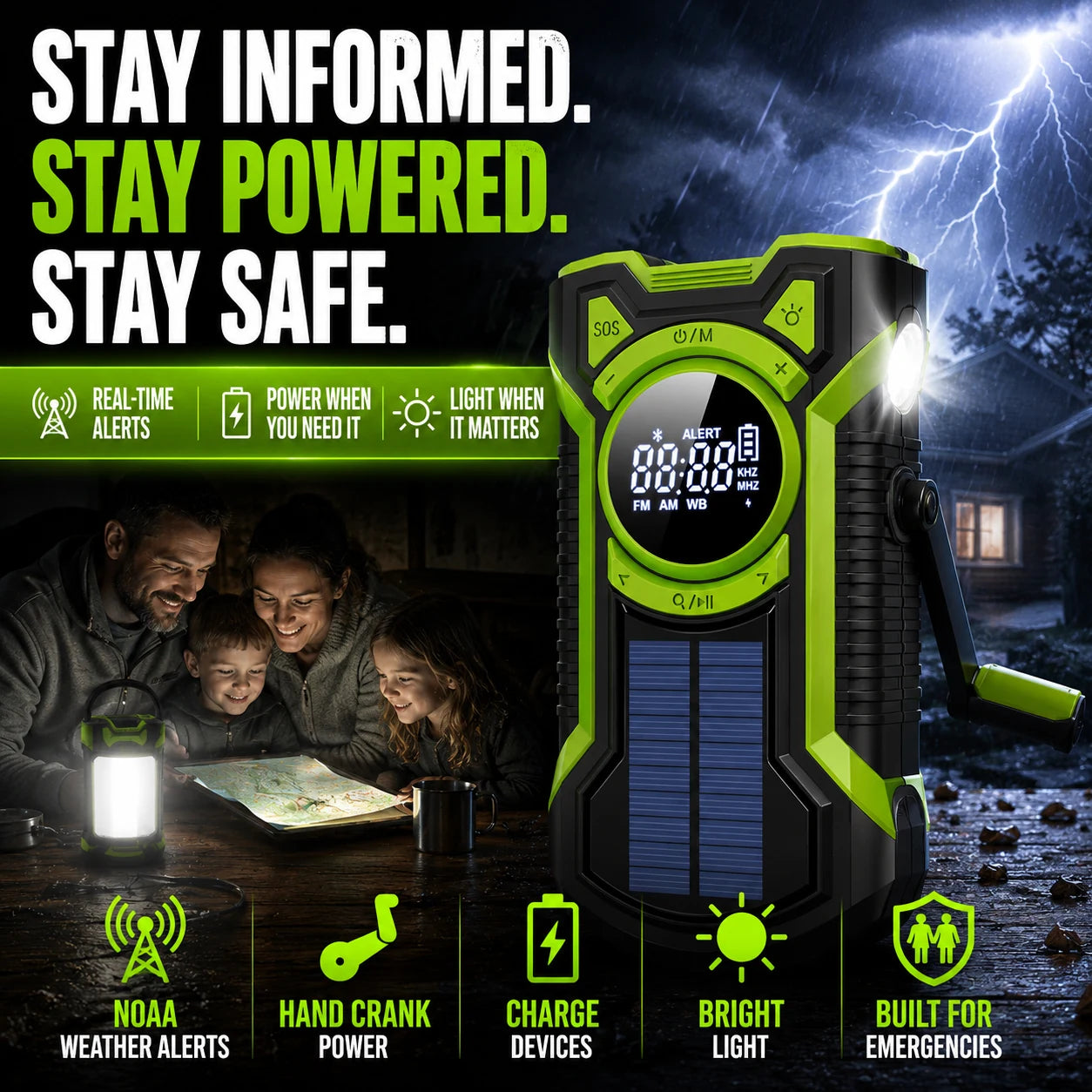 In this guideStormReady$119.99View
Field note
Charge or crank a power-source radio on a set day each season, and write the date on masking tape on the case. A radio that has sat for months is not the one to find out about during an outage.
Weak-signal checklist for a portable radio fm am
If stations fade or crackle, work through this list before you blame the radio.
- Extend the telescopic antenna fully and rotate it between vertical and horizontal.
- Rotate the whole radio slowly while listening to AM.
- Move next to a window, or take it outside or up a floor.
- Switch off nearby lamps, chargers, dimmers and other electronics, which add noise to AM.
- Keep the radio away from metal shelves, appliances and large steel objects.
- Fine-tune slowly. Stations can sit between two steps on an analog dial.
- Try the same station on both bands if it broadcasts on both.
- Check the power source. Weak cells or a low internal battery can make the sound distorted.
- Listen again at a different time of day. AM stations travel differently after dark.
Weather band stations are on fixed channels, so a radio with NOAA channels needs the same steps: raise the antenna, move to a window and try again. If you want to explore beyond broadcast bands, What Is a Radio Frequency Scanner and How Do You Use One? covers a different kind of receiver.
Common mistakes when buying
- Choosing on speaker size alone and ignoring the antenna.
- Buying a radio with one power source for an outage kit.
- Skipping the weather band when the radio is meant for storms.
- Leaving the radio in a drawer and not checking its power before you need it.
- Expecting AM to sound like FM. AM is built for range and voice, not for wide music sound.
Settle on your location, antenna, tuning type, speaker and power source in that order, and the choice narrows. Use the checklist above when you set the radio up in its first spot.