Running Headphones: How to Choose a Pair That Stays Put
Pick running headphones by fit: ear hooks add a second contact point, in-ear tips seal the canal, and bone conduction leaves your ears open. Use the fit-test checklist to confirm.
The Folio & Current Team
October 24, 2026 · 6 min read · Updated October 28, 2026

The right running headphones are the ones that keep contact with your head at every stride and leave you able to hear your surroundings. Ear hooks add a second point of contact, in-ear tips with wings or fins seal inside the ear canal, and bone conduction rests on the cheekbones and leaves the ears open. Pick the style that matches where you run, then confirm the fit with the shake test below.
This guide compares the three fit styles on stability, sweat resistance and awareness of traffic, then gives you a checklist to run before you commit to a pair.
Running headphones fit styles compared
Every style solves the same problem, which is bounce. Each stride sends a small shock through your head, and anything held by one thin point can work loose. The table shows how the main styles hold on and what they do to outside sound.
| Fit style | How it holds | Ear canal | Outside sound | Check before buying |
|---|---|---|---|---|
| Ear hook earbuds | Ear tip plus a hook over the outer ear | Tip sits in the canal | Reduced by the tip seal | Tip sizes included, hook shape |
| In-ear, no hook | Tip and ear shape only | Tip sits in the canal | Reduced by the tip seal | Fins or wings, tip sizes |
| Bone conduction | Frame rests on the cheekbones | Stays open | Ears remain uncovered | Frame fit with glasses, hat or helmet |
| Over-ear band | Headband across the head | Covers the ear | Reduced by the cups | Weight, sweat build-up under cups |
The sections below cover the three styles runners weigh most. Over-ear headband designs suit the gym and commuting more than the road, and our guide to wireless over-ear noise canceling headphones covers that format in detail.

Ear hooks: a second point of contact
An ear hook loops over the outer ear so the bud is not relying on the ear tip alone. The tip seals in the canal, and the hook adds a second contact point that resists the bounce of a stride. This suits runners who want the sealed sound of earbuds on pavement or on a treadmill.
Tip size matters as much as the hook. A set that includes small, medium and large silicone tips lets you match the canal, and a mismatched tip can let a bud shift mid-run. Physical buttons are worth a look too, since you can press them with gloves on in cold weather.
 In this guidePaceLock$89.99View
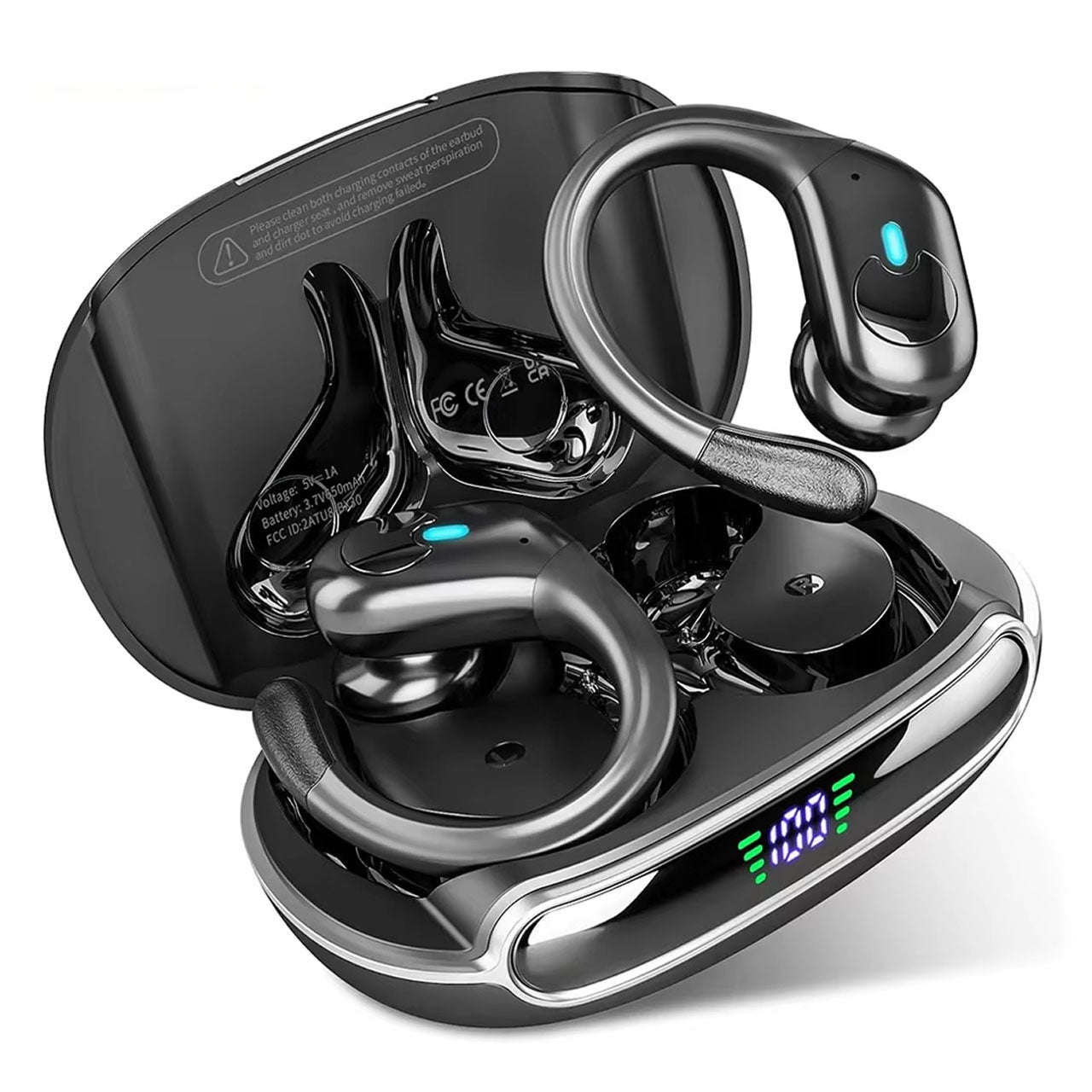
PaceLock follows this layout: an over-ear hook on each bud, three silicone ear tip sizes (S/M/L) and physical buttons for volume, skip and calls. It uses Bluetooth 5.3 and a charging case with an LED display for bud and case battery levels. A nano-coating covers the driver and charge contacts inside the buds.
Bone conduction: running headphones with open ears
Bone conduction sends sound as gentle vibrations through the cheekbones, so nothing goes into the ear canal. For running headphones, bone conduction designs are the option to look at if you run on roads, share paths with cyclists or run with a partner and want to hear them speak.
The trade-off is how the frame sits. It rests against the cheekbones, so check it against sunglasses, a cap or a helmet strap before you rely on it. Because the ears stay open, sound also reaches people near you, so keep the volume moderate on a train, in a gym or on a shared trail.
 In this guideVibeRidge$99.99View
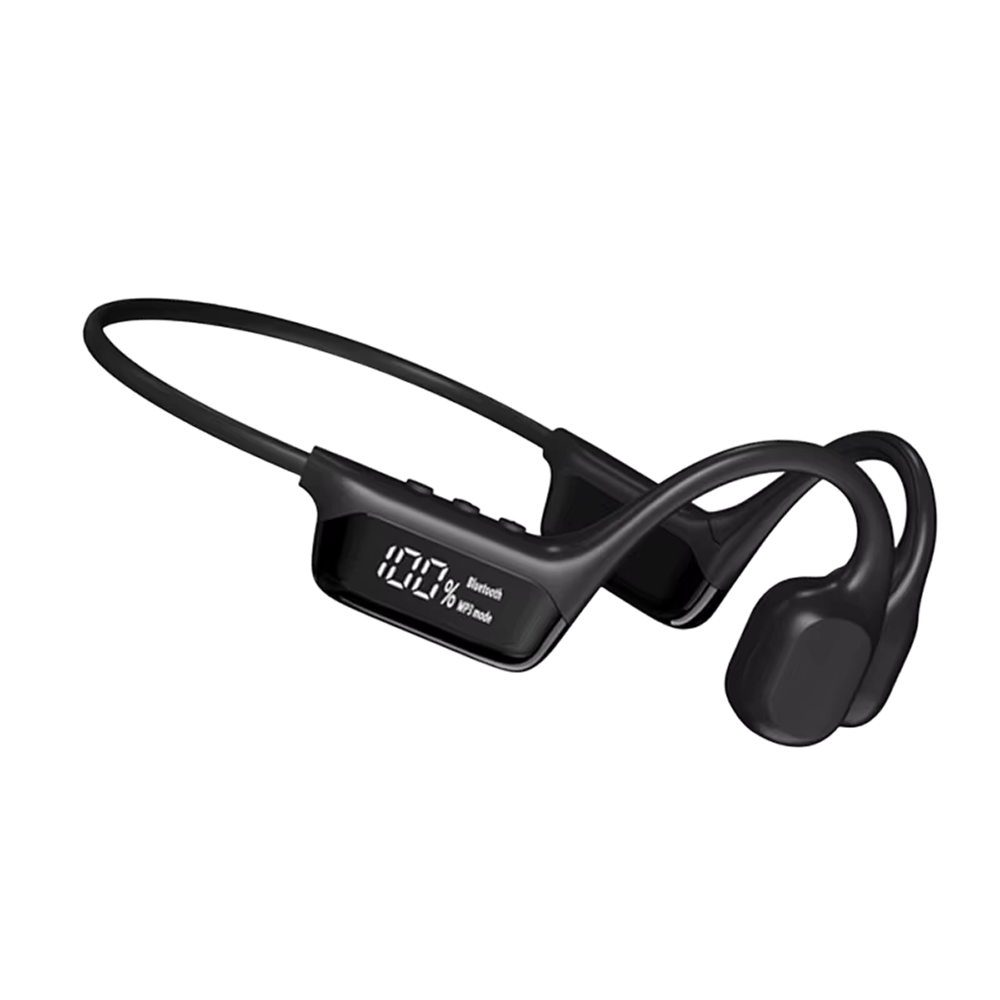
VibeRidge is an open-ear pair that uses bone conduction, with a frame shaped for running, cycling or gym sessions. It connects to a phone over Bluetooth 5.4 and has 32GB of onboard storage, so one button press switches to MP3 mode and plays tracks with no phone connected. A physical button handles playback, and a display shows the battery level. Directional sound technology aims audio toward your ears.
In-ear fit without a hook
Hookless in-ear buds rely on the tip and on fins or wings that press into the folds of the ear. They are compact and light, and they pack small. The fit depends heavily on your ear shape, so tip sizes and wing options carry more weight here than any spec on the box.
If you choose this style, plan to try several tip sizes. Your left and right ear may need different sizes, so swap them one at a time rather than assuming a pair.
Hearing traffic and race rules
Sealed tips lower outside sound, which can hide cars, bikes, dogs and other runners. Open-ear designs leave your ears uncovered, so you can still hear traffic, trails and training partners. Neither style replaces looking around you, crossing with attention and following local traffic rules.
Some race organizers restrict or discourage headphones because runners need to hear course marshals, announcements and other participants on a crowded route. Read the event rules before race day, and train with the setup the rules allow. If you want a finish-line playlist, check whether open-ear audio is permitted.
Habits that help on the road
- Keep volume low enough to hear footsteps and engines.
- Run with one earbud out on busy routes if the rules and your judgment allow it.
- Face traffic on roads without sidewalks, where local rules say to.
- Take listening breaks, and ask a hearing professional if you have concerns about your ears.
Field note
Whatever style you choose, set the volume before you start moving. Changing it mid-stride by feel can leave it higher than you meant.
Sweat resistance and care
Sweat is the other thing running headphones face every session. Look for an ingress protection rating on the product page or in the manual, and read what the numbers cover rather than assuming a sport label means full protection. Charge contacts and mesh grilles are where salt and moisture settle.
A simple care routine helps any pair last through a training block:
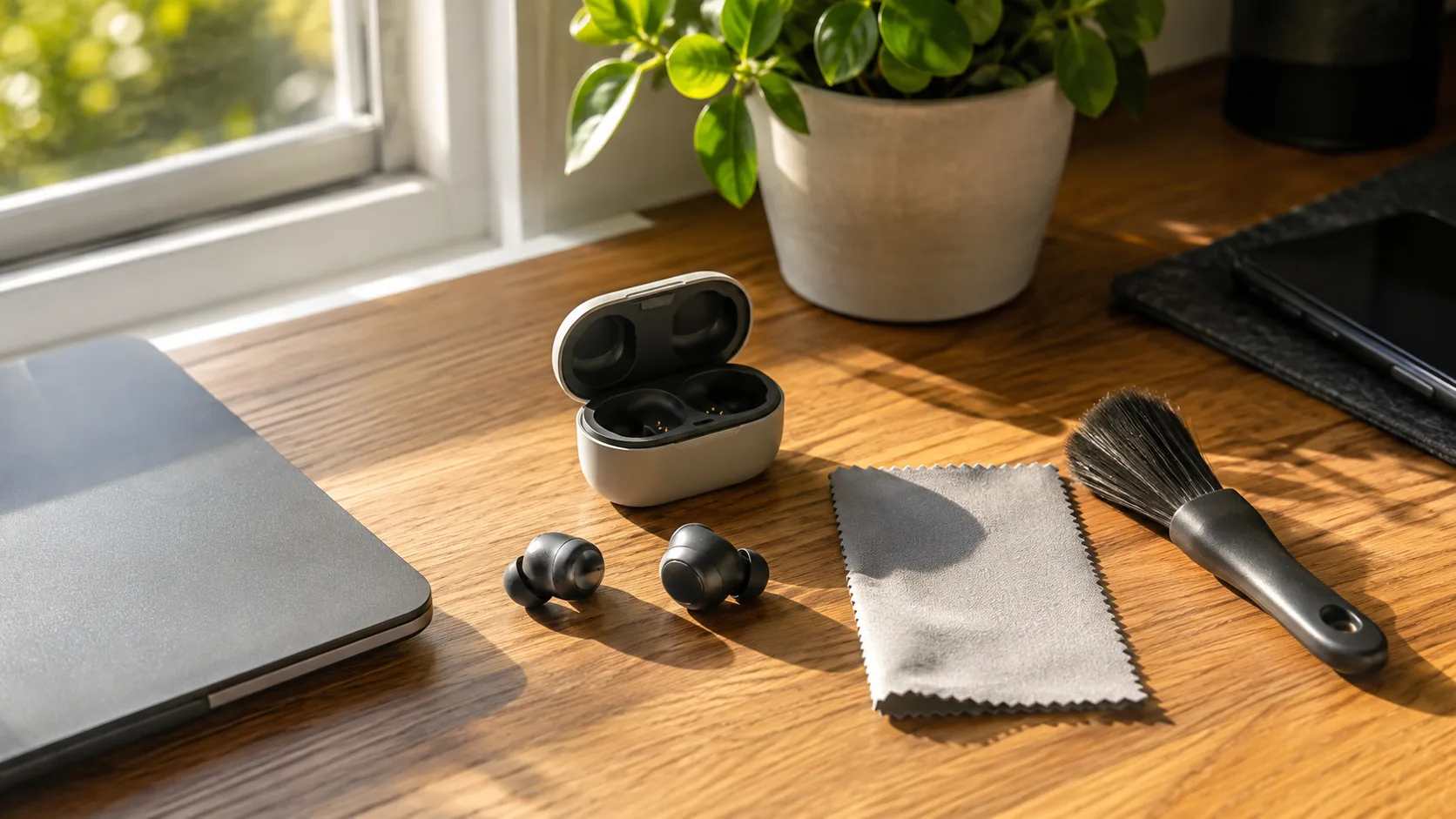
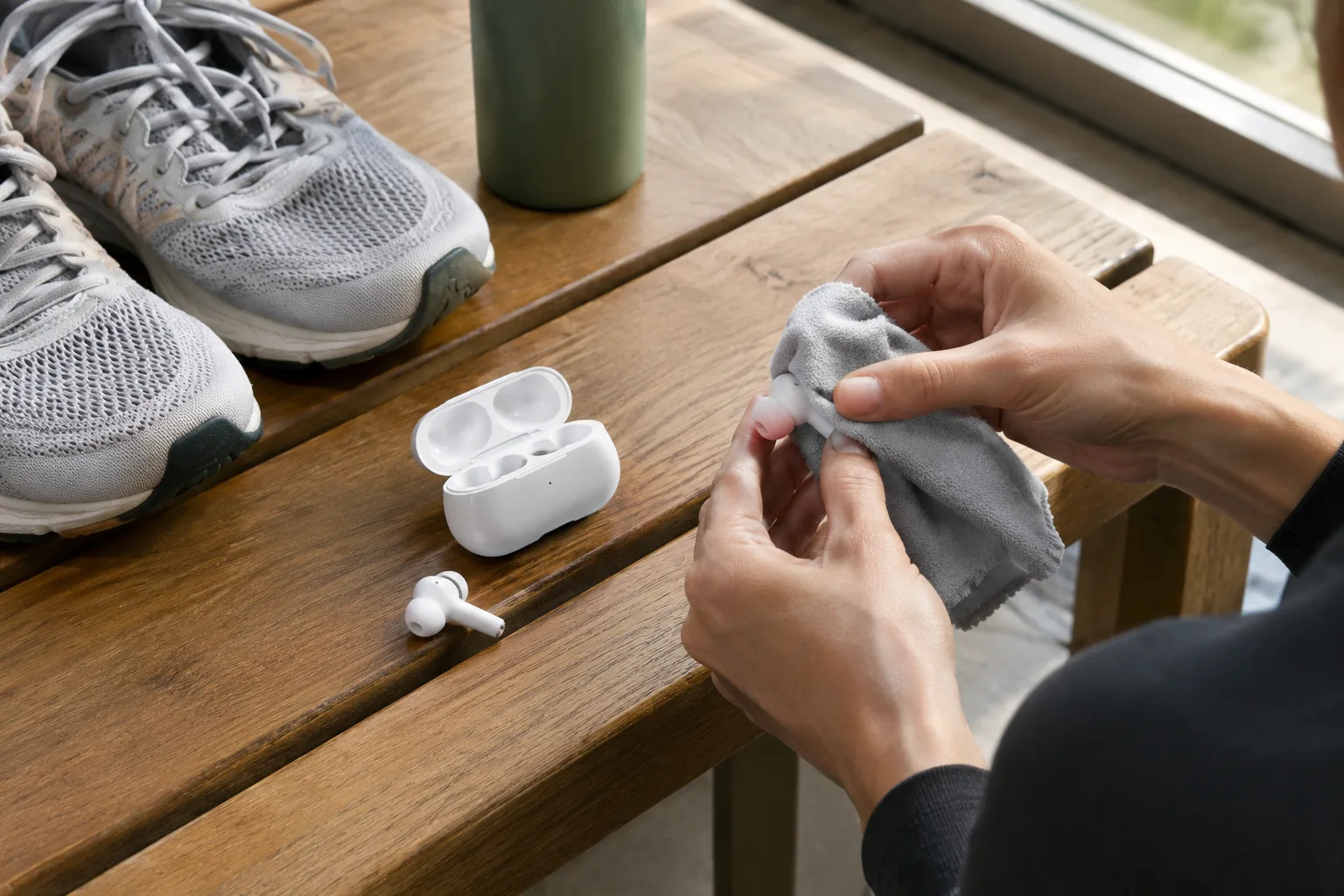
- Wipe the buds or frame with a dry soft cloth after each run.
- Let them air-dry before they go back in a charging case or bag.
- Clean ear tips and charge contacts as the manual describes.
- Unplug the charging cable before you wipe anything near the port.
- Replace worn silicone tips when they lose their shape.
Browse the full Headphones & Earbuds collection if you want to compare more styles side by side.
Fit-test checklist before you commit
Run through these steps at home, while the return window is open and the pair is still clean. Follow the manual for pairing and charging first.
- Choose the ear tip or adjust the frame as the quick-start material describes.
- Play music and shake your head side to side, then nod up and down.
- Jump in place and jog on the spot for a full song.
- Put on your usual cap, glasses or helmet strap and repeat.
- Check that the pair does not shift when you turn your head to look over your shoulder.
- Press every button with dry fingers and with gloves.
- Note any spot that needs readjusting, because it will repeat on a long run.
Common mistakes when choosing
- Buying for the spec sheet and skipping the tip sizes.
- Assuming a sport label covers sweat, rain and cold without reading the manual.
- Forgetting that a cap or glasses changes where the frame sits.
- Choosing touch controls, then struggling with gloves or wet fingers.
- Setting volume high to cover wind, which hides traffic.
How to decide in four steps
- List where you run: roads, trails, treadmill or track.
- If you need to hear traffic and partners, start with bone conduction. If you want a sealed sound for a treadmill, start with ear hook earbuds.
- Check what you wear on your head during runs.
- Decide whether you want to run without a phone, in which case onboard storage with an MP3 mode matters.
Match the answers to the table above, run the checklist, and keep the pair that stays still through every step.