How Do Bone Conduction Headphones Work? Tradeoffs vs Sport Earbuds
Bone conduction headphones send sound as small vibrations through your cheekbones to the inner ear, leaving the ear canal open. Here is the mechanism and how it compares with sport earbuds.
The Folio & Current Team
October 31, 2026 · 7 min read

How do bone conduction headphones work? They turn audio into small vibrations and pass those vibrations through your cheekbones to the inner ear, so sound reaches the cochlea without entering the ear canal. Your ears stay uncovered, which is why this style is called open-ear. The tradeoffs are in bass, sound leakage and volume habits, and the comparison table below lines them up against in-ear sport earbuds.
How do bone conduction headphones work: the mechanism
Traditional headphones move air. A speaker cone pushes sound waves down the ear canal, the eardrum vibrates, and the small bones of the middle ear pass that motion to the inner ear. The inner ear turns the motion into signals your brain reads as sound.
Bone conduction skips the first part of that chain. A small transducer inside the headset vibrates against the side of your face. The vibrations travel through the facial bones directly to the inner ear, which responds to them in the same way it responds to vibrations that came through the air. The same principle appears in some hearing aids and other hearing devices.
The physics in plain terms
The cochlea is a fluid-filled spiral inside the skull. It does not care how its fluid gets moving. Whether the push comes from the eardrum and middle ear or from the bones around it, the fluid shifts, tiny hair cells react, and the brain receives a signal.
Pitch matters for the path. High and middle frequencies need only small movements, so they pass through skin and bone with little effort from the transducer. Low frequencies need larger, slower movements, and skin and soft tissue cushion the contact point. That is why bass is the area where you should listen closely when you try a pair.
Do bone conduction headphones have speakers?
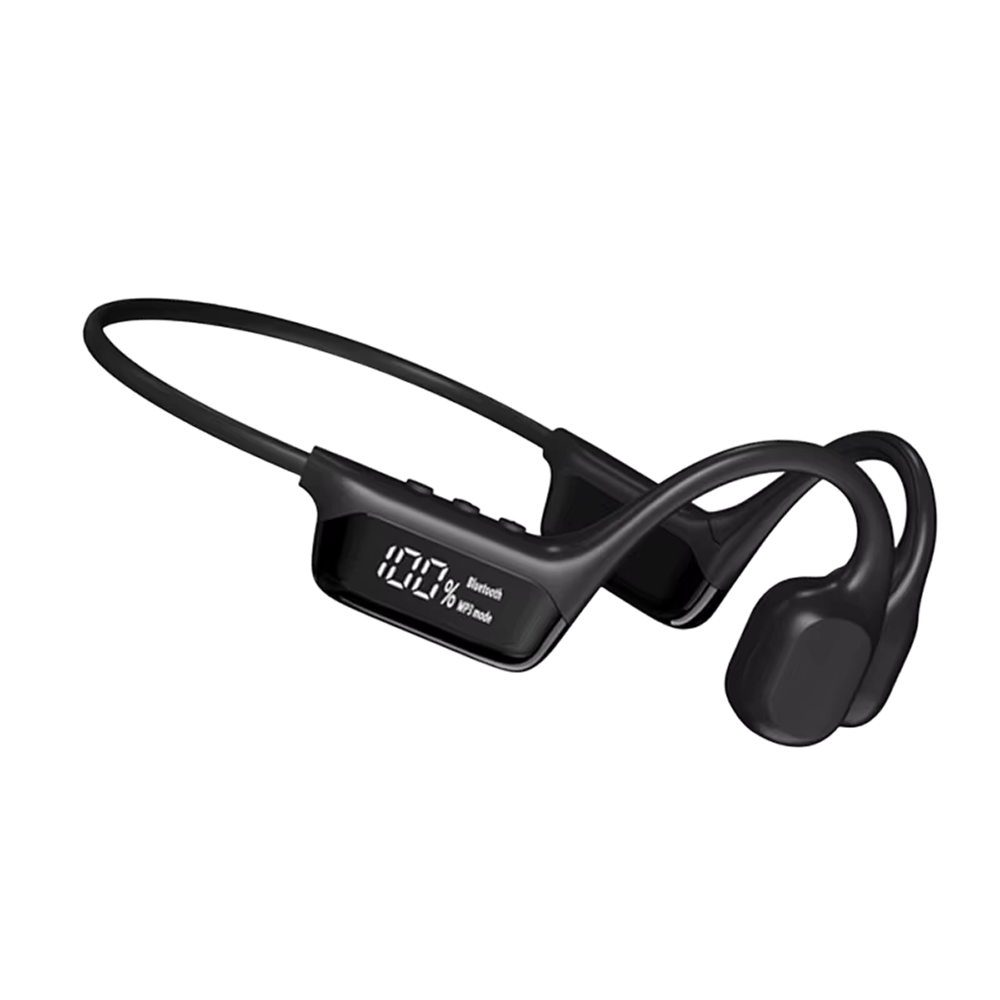
Not in the usual sense. There is no cone aimed into your ear canal. The part that makes sound is a vibrating transducer that rests against your skin. Some designs add a directional element that aims audio toward the ears. That is how VibeRidge is described: it uses directional sound technology that aims audio toward your ears, which is meant to keep your playlist more contained when you train in a quiet space such as a gym.
Why the frame matters
Because the transducer has to touch you, the frame is part of the sound system. On VibeRidge, the open-ear frame sits against your cheekbones, and no earbuds go into the ear canal. If the frame shifts during a run, the contact point shifts with it, so a steady frame contact matters here in a way it does not with a sealed tip.
 In this guideVibeRidge$99.99View
Do bone conduction headphones work for everyday listening?
Yes. You can listen to music, podcasts and calls through bone conduction, and the sound reaches the same inner ear as it does with any other headphone. What changes is the character of the sound, so judge it by listening. Pay attention to how bass, vocals and detail come across compared with what you are used to.
Some practical points to keep in mind:
- Frame contact affects the sound. Adjust the fit until the tone sounds steady.
- Ambient noise mixes with your audio, because nothing blocks the ear canal.
- Earplugs change the experience. They can change how loud and full the audio seems, so start at a low volume and raise it slowly.
- Hearing differs from person to person. If you have a hearing condition, ask an audiologist whether this style suits you.
Judge the first session on a familiar track, ideally one with clear vocals and some low notes, so you know what to compare against. If you care about fidelity at the file level, our guide to lossless audio explains when higher-quality files make an audible difference.

Open-ear vs in-ear sport options compared
The choice is between leaving the ear canal open and putting a tip in it. Neither approach suits every setting. This table compares the two styles using the two sport designs we stock: VibeRidge for open-ear bone conduction and PaceLock for an in-ear earbud with an over-ear hook.
| Factor | Open-ear bone conduction (VibeRidge) | In-ear with over-ear hook (PaceLock) |
|---|---|---|
| How sound arrives | Vibrations through the cheekbones | Driver sends sound toward the ear canal |
| Ear canal | Uncovered, nothing inserted | Ear tip sits in the canal |
| Sound delivery | Sound delivered as vibrations through the cheekbones | Driver; ear tip sits in the canal |
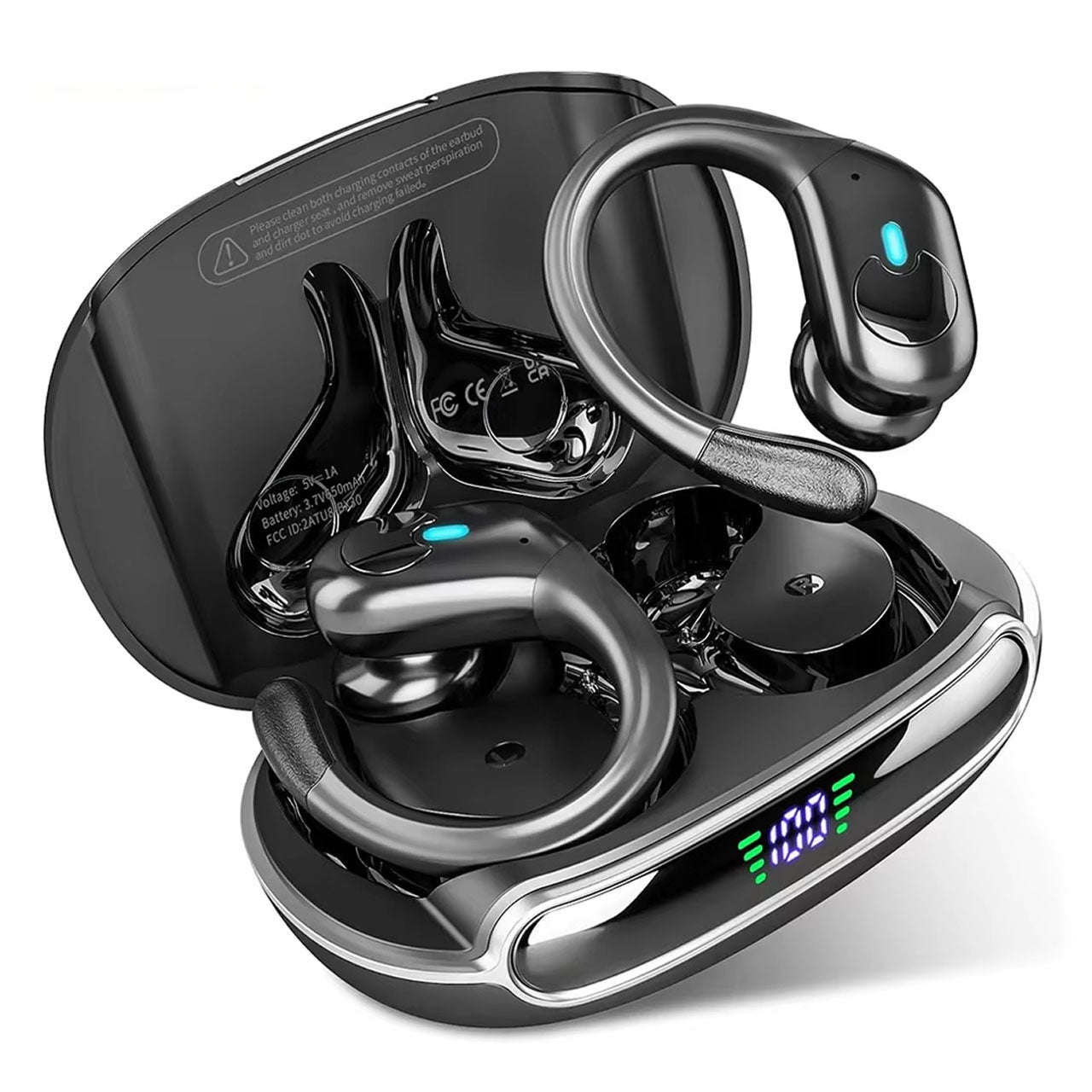
| Fit | Open-ear frame rests against the cheekbones | Three silicone ear tip sizes plus a hook on the outer ear |
| Sound leakage | Directional sound aims audio toward your ears; nearby people may still hear audio at high volume | Depends on tip fit and volume; high volume can still be heard by others |
| Awareness of surroundings | Ears uncovered, so traffic, trails and partners stay audible | Tip in the canal changes how much outside sound reaches you |
| Controls | Physical button, battery level display | Physical buttons for volume, skip and calls |
| Connection and power | Bluetooth 5.4, plus MP3 mode with 32GB storage | Bluetooth 5.3, charging case with LED battery display |
If you train outdoors near roads, open ears are the main draw. If you want a closed, in-ear format and a charging case, an earbud with a hook is the matching design. Knowing how bone conduction headphones work makes the table easier to read: the left column keeps the ear canal free, the right column uses it.
 In this guidePaceLock$89.99View
Disadvantages of bone conduction headphones
Weigh these points before you choose a pair:
- Bass response: listen for how low notes come across, since low frequencies are the hardest to carry through skin contact.
- Sound leakage: at higher volume, people nearby may hear your audio.
- Noisy settings: wind, engines and gym music compete with your audio because the ear canal is open.
- Contact point: the frame has to sit in the right spot against the cheekbones.
- Volume habits: because outside sound stays audible, it is tempting to raise the volume to cover it.
That last point leads to the hearing question. Open-ear designs also give you situational awareness that a sealed tip does not, so the tradeoff runs both ways.
Hearing, volume and the brain
Can bone conduction damage hearing?
Any headphone can contribute to hearing damage when the volume is high for long sessions, because the inner ear is working either way. Open-ear designs bypass the middle ear, but they do not remove the need to keep volume moderate and to take listening breaks. If you notice ringing or muffled hearing, lower the volume and ask an audiologist.
Do bone conduction headphones affect the brain?
This guide cannot give health assurances. If you have implants, a hearing condition or other concerns, ask your physician or an audiologist before use, and follow the manual.
Fit checks
If the frame sits unevenly or you notice anything unusual during a session, remove it and take a break. Adjust the fit before the next try, and check the manual for guidance on how long to wear it at a time.
How to wear and set up bone conduction headphones
- Place the frame so it rests against your cheekbones, just ahead of the ears. No part goes into the ear canal.
- Pair with your phone over Bluetooth. VibeRidge uses Bluetooth 5.4.
- Start at a low volume, raise it until you hear clearly, then leave it there.
- Check the fit by turning your head and moving the way you train.
- Use the physical button to start playback and control your music.
How do you load music onto bone conduction headphones?
Only models with built-in storage can play files on their own. VibeRidge has 32GB of onboard storage, and one button press switches to MP3 mode so you can play tracks with no phone connected. Follow the Quick-Start User Guide in the box for how to load your files.
Wireless and phone-free use
Wireless bone conduction headphones pair with a phone over Bluetooth, which suits running and gym sessions where a cable would get in the way. A model with onboard storage adds the option of leaving the phone at home. If you prefer a wired pair, check the product page for the connection type before you buy.
Field note
Set the volume where you train. Resist raising it to cover traffic or wind, and turn it down on quieter stretches, since open-ear audio blends with your surroundings.
Choosing between open-ear and in-ear
Work through these checks in order:
- List where you listen. Roads, trails and group runs point toward open ears. Loud gyms and commutes may suit a tip in the canal.
- Decide how much sound leakage matters in shared spaces such as offices or quiet gyms.
- Think about phone-free sessions. Built-in storage and an MP3 mode matter here.
- Check the fit. A hook with three tip sizes suits some ears; a cheekbone frame suits others.
- Look at the charging method: a case that charges over USB-C, or a cable.
Common mistakes
- Judging bass in a noisy room. Listen in a quiet one first.
- Raising the volume to beat wind or traffic.
- Wearing the frame too far back, away from the cheekbones.
- Skipping the manual for pairing and storage steps.
For a wider look at keeping a pair in place while you move, read Running Headphones: How to Choose a Pair That Stays Put. You can also browse the full Headphones & Earbuds collection.